Get Full Government Meeting Transcripts, Videos, & Alerts Forever!
Get email alerts on the Save America Act topic
No spam. Unsubscribe anytime.
Senator defends Save America Act, says opponents' 'poll tax' claims are false
Summary
On the Senate floor a senator defending the Save America Act rejected assertions that the bill would force voters to buy passports or otherwise impose a 'poll tax,' described an affidavit alternative that shifts verification to states, and argued Congress has authority to regulate federal elections under Article I, Section 4.
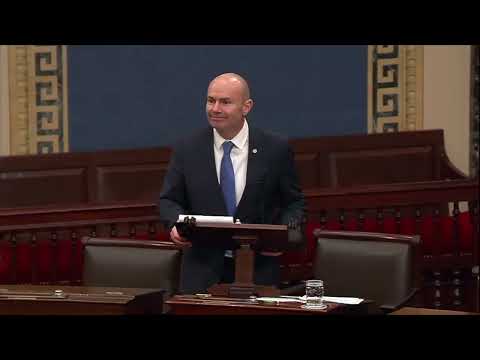
A senator addressed the Senate floor as debate entered its third day to rebut critics of the Save America Act, saying opponents have repeatedly mischaracterized the bill and misstated its requirements.
The senator said the bill does not require voters to purchase passports or pay any fee to register and vote. "Not a single dollar, not a single dime, not a single nickel...has to be expended by the registering voter in that moment," the senator said, adding the bill provides alternatives to costly documents and includes a sworn-affidavit process for voters lacking original records.
He likened the bill's documentation options to the I-9 employment verification process, saying Americans routinely establish citizenship with a passport or with "an original certified copy of your U.S. birth certificate and a government-issued photo ID." He said some forms of Real ID and certain tribal identification could also qualify under the bill's text.
The senator described an affidavit pathway he said appears in the legislative text and would allow a would-be voter who lacks original documents to make a sworn attestation of citizenship; under that process, he said, "the burden shifts...onto the state" to verify the claim. He emphasized the affidavit would not require the voter to produce documents or to pay money at the point of registration.
Turning to constitutional authority, the senator cited Article I, Section 4 to argue Congress may "make or alter such regulations" for federal elections and pointed to past federal statutes and court decisions as precedent. He cited the National Voter Registration Act (NVRA) and Arizona v. Inter Tribal Council as part of the legal and practical backdrop informing the bill.
The senator also criticized states that allow non‑citizen voting in some local contests and that, he said, refuse to share registration files or cooperate with federal databases such as SAVE. He argued that gaps in information sharing make detection of non‑citizen voting difficult and said the bill aims to close that enforcement gap.
He acknowledged some colleagues have raised concerns tied to particular amendments or substitute texts under consideration and singled out the senior senator from Alaska as having raised concrete points he believes could be resolved through discussion or modest changes. He urged colleagues to bring legitimate textual objections forward, saying he was open to fixes; by contrast he described repeated claims that voters must pay to vote or obtain passports as "lies."
The senator urged passage of the bill and indicated he planned to continue floor debate and return to the issue until it passed.
The Senate debate continued without a final vote recorded in the provided transcript.