Get Full Government Meeting Transcripts, Videos, & Alerts Forever!
Get email alerts on the Environment Water topic
No spam. Unsubscribe anytime.
River Foundation warns rocket motor testing at Freeman Ranch could threaten Edwards Aquifer
Summary
At the March 31 San Marcos City Council work session, Virginia Parker of the River Foundation urged the council to ask Texas State or the Board of Regents to move proposed solid rocket motor testing off the Freeman Ranch Edwards Aquifer Recharge Zone, citing risks to drinking water for more than 2 million people.
Virginia Parker, a representative of the River Foundation, told the San Marcos City Council during the public-comment period on March 31 that proposed solid rocket motor testing at Freeman Ranch would take place on the Edwards Aquifer Recharge Zone and could threaten a critical source of drinking water for “over 2 million people.”
Parker said the group is not asking Texas State University to halt research but asked councilmembers to consider asking university leaders or the Board of Regents to relocate testing off the aquifer. “We are not asking Texas State not to do this research,” she said. “We just don't want them to do it over a very critical source of drinking water for over 2 million people including a lot of people in San Marcos. We all drink that water.”
Parker told the council she had consulted an environmental attorney who described the proposed testing as unusually risky; she repeated the attorney’s recommendation that a formal letter to the Board of Regents or university leadership would be an appropriate first step if the council wished to register concern. She also noted the site is on the Edwards Aquifer Recharge Zone, where stormwater rapidly percolates into the aquifer with minimal surface filtration.
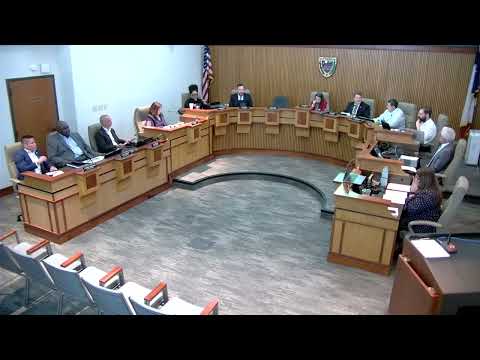
The comment came during citizen-comment time at a San Marcos City Council work session; Parker urged the council to use its influence to request that Texas State University move testing to a location off the recharge zone. No council response or formal action was recorded during the meeting minutes for the 3:00 p.m. session.
Among local officials and residents, concerns about activities on recharge zone lands commonly focus on potential contamination risks to municipal and regional water supplies; Parker’s remarks heightened those concerns and requested a specific next step (a letter to university leadership) that the council could choose to pursue or decline.