Get Full Government Meeting Transcripts, Videos, & Alerts Forever!
Get email alerts on the County Budget topic
No spam. Unsubscribe anytime.
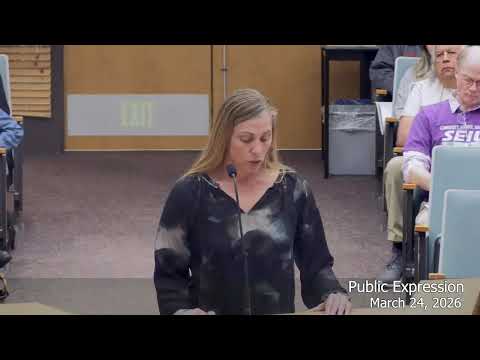
Mendocino supervisors review preliminary 2026–27 budget, adopt simplified reserve policy
Summary
The Board of Supervisors reviewed an interactive preliminary FY 2026–27 budget and five-year forecast, directed staff to return a cannabis-delinquent-tax item on April 7, and unanimously adopted a simplified three-part reserve policy intended to improve fiscal stability.
On March 24 the Mendocino County Board of Supervisors accepted a preliminary presentation on the FY 2026–27 budget and an interactive five-year forecast, then unanimously approved a reworked reserve and fund-balance policy designed to make county finances more resilient.
Deputy CEO Tony Rakes told the board the county is starting with a net county cost of about $93.7 million and non-departmental revenue of roughly $90.4 million, leaving an early budget gap of about $3.3 million. Rakes said the numbers are preliminary and based on department submissions, and that staff will refine projections as a part of the proposed budget process. "We're at about $93.7 million right now...that leaves a budget gap of 3.3," Rakes said.
The presentation recap included a carryforward from FY 2024–25 of $11.14 million, of which roughly $6.13 million remained after prior allocations. Staff recommended setting aside part of one-time balances for finance and property system modernization and reserving certain one-time funds for capital or one-time projects rather than recurring operations.
The board also directed staff to bring back an item on delinquent cannabis tax collection at the April 7 meeting to provide options for collection and remedies. Assistant CEO Sarah Pierce said the intent is to return with additional information from county counsel, planning and the cannabis program.
Separately the board moved to adopt a streamlined reserve policy presented by consultant Ben Rosenfield and staff. Rosenfield said the county s existing reserve targets were below industry and peer standards, leaving the county exposed to shocks. The new policy replaces a complex multi-subreserve structure with three clear reserve categories: a contingency reserve set at 5% of general fund expenditures to handle within-year shocks; a rainy-day emergency reserve that would grow in good years (target up to 15%) to help bridge multi-year downturns; and an infrastructure-and-systems reserve to address deferred maintenance and modernization needs. "The targets that are established in that reserve policy are well below recommended industry standards," Rosenfield said.
Supervisors asked about phase-in mechanics and whether any of the funds would be available for known near-term needs such as water projects. Staff said reallocation of existing contingency balances would be used to populate the new reserves and that any future spending decisions would be brought back to the board.
The board voted unanimously to adopt the reserve and fund-balance policy and to accept the budget workshop presentation with direction to return the cannabis delinquent-tax item on April 7. Staff said more detailed departmental analyses and the interactive forecast will be used as the budget process continues.
Next steps: staff will return with the cannabis-tax item, continue budget conferences with departments, and bring proposed budget documents and the refined five-year forecast to the board for subsequent hearings.