Get Full Government Meeting Transcripts, Videos, & Alerts Forever!
Get email alerts on the Labor Wages topic
No spam. Unsubscribe anytime.
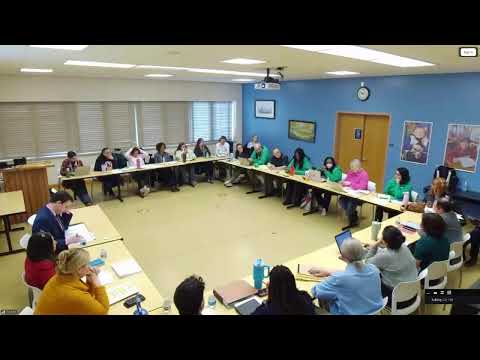
Bargaining stalls over timing of 2.63% raise as district cites $46 million structural deficit
Summary
Milwaukee Public Schools and MTEA continued bargaining over a 2.63% cost-of-living adjustment after the district said the full percentage is affordable only with a January 1 start (half-year pay in FY27), citing a $46 million structural deficit and asking MTEA to propose a workable split or timing within the statutory ceiling.
The Milwaukee Public Schools administration told MTEA negotiators it has offered the full 2.63% base, but that a January 1, 2027, effective date is the only viable option within its current budget, producing roughly six months of increase in the first year rather than a full-year increase.
The district framed that timing as the source of its year-one fiscal savings and asked whether MTEA could accept any structure, timing, or split within the 2.63% statutory ceiling that would bridge the gap. "The size of the raise is full in the terms of percentage. The timing in year one is half," the district representative said, illustrating with a $50,000 salary example (about $657 additional in the first year with a January start versus $1,315 under a July 1 start).
MTEA pressed the administration for the underlying math behind Options A, B and C and for clear costing that distinguishes CPI-only costs from the rollup effects (benefits, steps/lanes). The union emphasized the real-world impact of a delayed start date, saying many front-line employees rely on summer pay schedules and would face months of heightened financial strain if the CPI is withheld until January.
Negotiators also disputed the district's broader fiscal picture. The administration said it is working to resolve a stated $46 million structural deficit within a $1.6 billion budget and that some FY28 revenues (about $14 million identified) factor into multi-year planning. The union said it believes the parties are only about $6 million apart on solvency assumptions and urged immediate transparency on contract savings, reserves and turnover assumptions.
On reserves and potential savings, the district reported approximately $500,000 in reserve set-aside and identified roughly $5 million in contract reductions under review; it also said it is auditing contracts and operations for further savings. The district agreed to provide the CPI math for Options A/B/C and to follow up with reconciled line-item numbers after a caucus.
The parties agreed to caucus, with the district to attempt to deliver usable costing after reconciliation and the union to send written follow-up questions. They scheduled a reconvening to continue bargaining once costing and additional responses have been exchanged.
What matters: The negotiation hinges not on the percentage but on timing and budget presentation. The administration says the January start is a necessary trade-off to manage a structural deficit; the union says delaying the raise imposes real hardships on roughly 6,000 frontline workers and presses that the district has budget levers it has not fully disclosed.
Next steps: Both sides agreed to caucus and to exchange specific costing information for Options A, B and C; district representatives said they would provide reconciled costing to the union as soon as possible and return to bargaining.