Get Full Government Meeting Transcripts, Videos, & Alerts Forever!
Get email alerts on the Railroad Safety topic
No spam. Unsubscribe anytime.
Committee backs bill requiring 250‑foot vegetation clearance at railroad crossings after mother's testimony
Summary
A Senate Transportation Committee advanced House Bill 311 after testimony from Tanya Cerna, whose 19‑year‑old son died when vegetation obscured a crossing. The bill would require railroads to clear 250 feet of vegetation in each direction and lets local agencies recover costs if railroads fail to act.
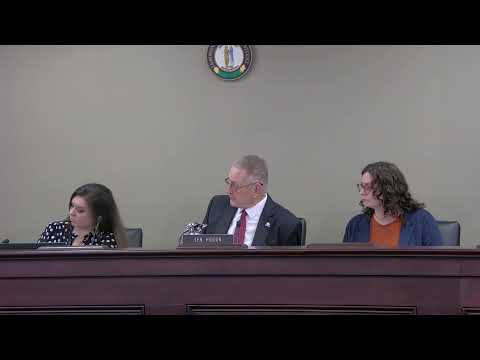
House Bill 311, a measure requiring railroad sightlines to be cleared of vegetation 250 feet in each direction, was reported favorably by the Kentucky Senate Transportation Committee after emotional testimony from a mother who lost her son at a railroad crossing.
Representative Josh Callaway, who presented the bill, told the committee the measure "requires at railroad crossings that vegetation would be cleared 250 ft back in each direction" and would allow local transportation entities to clear obstructions and recover costs from the railroad if necessary. Representative Nancy Tate, who originally filed the measure, was present with the sponsors.
Tanya Cerna testified about her son, Hunter Christian Cerna, a 19‑year‑old engineering student at the University of Louisville, describing how vegetation at a crossing obscured the view that night in April 2020. "The vegetation was what obscured the driver's vision," Cerna said, explaining her advocacy for a statutory clearance standard in the Commonwealth.
Committee members asked how enforcement and cost recovery would work if a railroad refused to pay. Sponsors said they had worked with railroad companies while drafting the language so litigation would be unlikely, but the bill includes authority for the Transportation Cabinet or local government to pursue legal action to recover costs if needed.
Chair Hickden thanked railroad companies for not opposing the language and noted the limits of state regulation over railroad property under federal law; he also acknowledged Gay Dwire traveled from Florida to confirm railroad cooperation.
The committee voted and House Bill 311 was reported favorably with a committee substitute and placed on the consent calendar with expressions of opinion. The bill will move forward on the legislative calendar for further consideration.