Get Full Government Meeting Transcripts, Videos, & Alerts Forever!
Get email alerts on the Campaign Finance topic
No spam. Unsubscribe anytime.
Town counsel urges caution: don’t use town email lists, staff time or town resources to influence override vote
Summary
Town counsel Jonathan Simpson told the Select Board that town or school email lists, staff time, letterhead and other public resources must not be used to influence the upcoming operating‑override ballot; elected officials can voice personal views but staff and appointed officials face stricter limits.
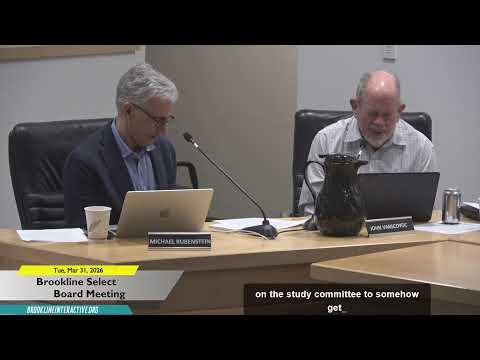
Jonathan Simpson, first assistant town counsel, spent more than an hour briefing the Select Board and members of the public on the legal boundaries for town officials and staff during the pre‑election period for the operating override. "Mass emails generally they are not allowed," Simpson said, adding it is unlawful to use email lists compiled by the town or schools to send unsolicited material about the ballot question.
Simpson told the board the same rule applies to other public resources: staff time, town letterhead, meeting rooms, seals and similar assets may not be used to influence how residents vote. "Use of public resources to influence voters is prohibited," he said, and warned that even apparently informational messages distributed through town lists would violate that principle.
Board members pressed for detail. Paul Warren said he wanted clarity that the rule did not bar an elected official from using a privately assembled contact list to advocate. Simpson agreed: "If it's a list you compiled on your own time, that's different. But a town or school list is a public resource and should not be used for mass unsolicited emails." He also explained that elected officials may identify their office when speaking on ballot questions, while appointed officials and town employees generally must not use the weight of their position in advocacy.
The briefing covered several frequently asked scenarios. Simpson said PTO or parent lists that are assembled outside the town’s official systems are generally treated differently from school email lists provided under town responsibilities. He also warned that staff may serve as technical resources when asked but should avoid taking public advocacy positions outside their professional duties. "Appointed officials and employees can engage politically on their own time," Simpson said, "but they cannot act as public‑facing agents for a campaign or fundraise using town resources."
Board members discussed other practical limits. Simpson advised that public spaces may be made available to outside groups for forums if equal access is provided to opponents; however he cautioned against the town actively distributing materials through its lists or sending unsolicited mailings. The town administrator and counsel said they are compiling follow‑up guidance for staff and will respond to particular questions from advisory committees and boards.
Simpson and the town administrator urged caution and recommended that officials contact town counsel before taking actions that might use public resources in the run‑up to the ballot. "If something is unclear, reach out to us in town counsel so we can give you specific advice," Simpson said. The board and town counsel plan to post clarifying guidance and to answer individual questions from committees and departments as the election approaches.