Get Full Government Meeting Transcripts, Videos, & Alerts Forever!
Get email alerts on the Governance topic
No spam. Unsubscribe anytime.
Longmont retreat leaders introduce AI-based team assessment to improve council‑staff conversations
Summary
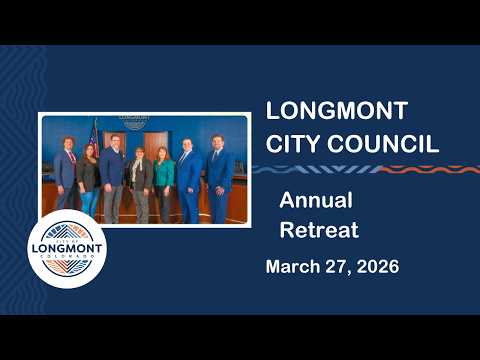
Facilitator Barrett Abrams introduced the AI-based WeOS assessment at the Longmont City Council retreat, and City Manager Harold Dominguez said staff ran council and executive teams through the tool to surface communication styles, blind spots and potential staff‑council friction points.
Barrett Abrams, from Confluence Policy & Strategy Group, opened the Longmont City Council’s retreat by describing the workshop format and the digital tools the facilitator team would use. “My name is Barrett Abrams and I'm with Confluence Policy and Strategy Group,” Abrams told the council as he outlined how the session would focus on self‑awareness and systems thinking.
City Manager Harold Dominguez then described the personnel assessments that staff have used — including DISC, a PRIN assessment and an AI‑based platform the presenters called WeOS — to help the council and senior staff understand individual communication tendencies and group cognitive diversity. Dominguez said staff had run the council and the city’s executive team through the assessments and are using the results to reduce blind spots and potential “group‑think.” He also announced an interim staffing change, saying that he had named Becky Doyle his acting assistant city manager.
Staff and the facilitator stressed the practical aims of the exercise: to help councilmembers and staff communicate more clearly and to identify where teams need additional perspective. The facilitator asked councilmembers to use colored desk lights during conversations to signal whether they wanted the discussion to continue, were nearing a point of fatigue, or wanted to move on.
Councilmembers tested portions of their individual profiles during the morning and discussed likely tension points — for example, members who favor speed and action versus members who prioritize precision — and how those dynamics show up during development review and other high‑stakes conversations. Staff and the facilitator framed the tool as a way to inform recruitment, task‑force composition and how staff brief the council on complex issues.
Next steps: the retreat agenda scheduled further sessions on systems thinking and community engagement, and staff urged councilmembers to review their reports and use the platform as a resource for targeted one‑on‑one conversations.