Get Full Government Meeting Transcripts, Videos, & Alerts Forever!
Get email alerts on the Disaster Recovery topic
No spam. Unsubscribe anytime.
Polk County prioritizes Indian Springs and Holiday Lakes for state flood‑recovery grant
Summary
Polk County Commissioners voted to submit Indian Springs as the county’s top priority and Holiday Lakes as second for the Texas General Land Office Local Communities disaster‑recovery program, citing emergency access, FEMA damage reporting and low‑to‑moderate‑income requirements. County staff must submit two projects by the GLO deadline.
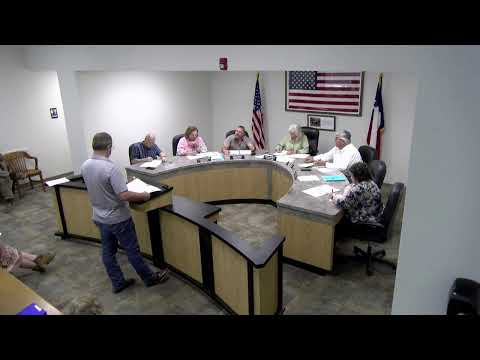
Polk County Commissioners on Tuesday chose Indian Springs as the county’s top project and Holiday Lakes as the second project to submit to the Texas General Land Office (GLO) Local Communities Program for 2024 flood recovery.
The court’s action followed staff briefings that projects must demonstrate a direct connection to damage from the 2024 flooding, serve primarily low‑to‑moderate‑income (LMI) beneficiaries, cost between $500,000 and $5 million and include a 5% county match. County staff said two prioritized projects must be submitted to the GLO by March 23; if the GLO issues only one invitation to apply, the county will later select which of its two submitted projects to pursue.
The decision centered on emergency access and the number of residents served. Commissioner Dubos moved to prioritize Indian Springs as number one and Holiday Lakes as number two; Commissioner Cassidy seconded, and the motion carried on a voice vote.
County staff and a grant administrator emphasized that projects must be tied to the flood event and that census LMI data often determines eligibility. If census data does not meet the LMI threshold for a project, staff warned, the county will have to conduct door‑to‑door LMI surveys before the application window. The grant administrator said Polk County’s prior FEMA damage reporting strengthened its competitive score: “You get 25 out of 100 points for FEMA damages,” the consultant said, commending the county for documenting damages.
Commissioner Pervvis’s written submission, read into the record, described roadway and bridge impacts on Nine Bridges Road and nearby connectors, noting roughly 10–10.5 miles of roadway and two bridges where water remained over a bridge for more than a week. That submission estimated about 20 homes (approximately 50 people) directly served by that project and reported that rock material was washed away between bridges during the flooding.
Speakers representing Indian Springs told the court their area includes several dirt roads that become difficult or impassable in wet conditions; one speaker estimated the area’s population at about 1,200 residents (staff asked that precise LMI household counts be provided for eligibility). Holiday Lakes was described as a loop with one ingress/egress that can be cut off in high water and was estimated in discussion to have a few hundred residents; staff noted that second‑home and rental properties do not count toward LMI determinations.
The sheriff testified that both Indian Springs and Holiday Lakes have posed recurring response problems, but singled out Indian Springs as an area with frequent access issues that impede law enforcement and emergency medical response.
Next steps: county staff will compile required LMI and damage documentation, identify the 5% county match source (likely from commissioners’ budgets), and submit the two prioritized project entries to the GLO by the stated deadline. If invited to apply, Polk County will prepare a full application with the required narrative tying the project to the 2024 flood impacts.