Get Full Government Meeting Transcripts, Videos, & Alerts Forever!
Get email alerts on the Public Transportation topic
No spam. Unsubscribe anytime.
Gary City council interviews two candidates for Republican seat on public transportation board
Summary
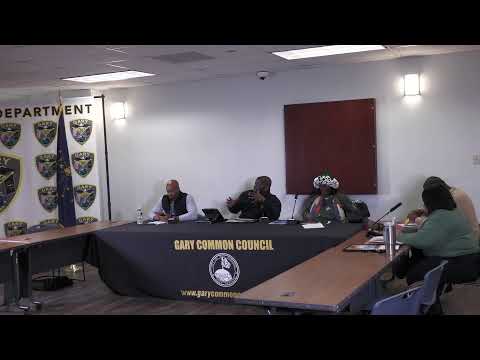
At a March 17, 2026 Boards and Commissions meeting, the Gary City Council interviewed two candidates for the Republican seat on the Gary Public Transportation board. Candidates described transit experience, proposed safety and reliability measures, and were asked to verify Republican primary voting history before a final appointment.
Gary City Council members on March 17 interviewed two candidates for the Republican seat on the Gary Public Transportation (GPTC) board but made no appointment.
Councilman Dwight Williams opened the Boards and Commissions meeting and said the body would hear three-minute statements from the candidates. One candidate, identified in the meeting as Mr. Carr, described himself as "a transplant here to Gary" who works in the steel industry as a process and quality engineer and cited community involvement with the Blind Social Center and neighborhood groups. "Why not? I might as well be on the board, see what's going on, see what I can contribute with my background," Carr said.
The second candidate, Seikka McClendon, told the council she has roughly 20 years of experience in transportation, holds commercial driver licenses and worked for about a decade as a driver for the Chicago Transit Authority. "My experience came from transportation," McClendon said. She told members she has noticed gaps in service and reliability and said she wants to help make transit safer and more dependable for residents.
During questioning, council members focused on two practical issues: party-eligibility verification and operational priorities. A council member noted a change in state law and told candidates, "we need to certify that you voted Republican in the most recent two primaries." McClendon said she had trouble voting in a recent primary because of polling-location changes and was asked to obtain a confirmation letter from the local party chair (Mr. Miller) and provide it to the council before its next meeting.
McClendon emphasized rider safety and reliability as priorities. She proposed stricter enforcement of no-phone policies for drivers, more training and closer communication between board members and operators so that route and stop decisions reflect riders' needs. She cited elderly residents waiting on 21st Avenue without marked stops and said she would use both her experience "on the ground" and conversations with drivers to seek improvements.
Council members said they would review the candidates' résumés and that Councilman Williams would present a nominee at the council's next meeting, which members confirmed had been moved to April 24. The boards and commissions meeting then adjourned.
No formal motion, vote or appointment was recorded in the transcript; the council treated the session as an interview and preliminary vetting step.