Get Full Government Meeting Transcripts, Videos, & Alerts Forever!
Get email alerts on the Firearms Policy topic
No spam. Unsubscribe anytime.
Debate over bill to bar "convertible" pistols centers on police safety and rights of lawful owners
Summary
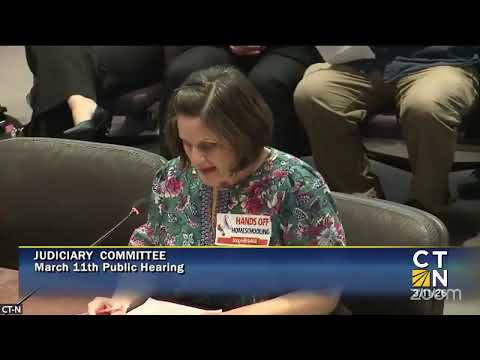
Lawmakers and witnesses at a March 11 Judiciary Committee hearing disagreed over Governor's Bill 5043, which would bar sales of pistols officials say can be readily converted to fully automatic firearms. Supporters urged industry accountability; opponents said the measure would punish lawful gun owners and raise constitutional and enforcement problems.
Chairman: The Judiciary Committee heard hours of testimony March 11 on Governor's Bill 5043, a proposal aimed at stopping handguns that witnesses say can be quickly converted into automatic weapons. Supporters said the measure focuses on sales and manufacturers, not current owners; opponents said it would burden lawful owners, risk litigation and would not stop criminals.
Supporters: Elizabeth Ryan of Every Town for Gun Safety told the committee the bill is “a smart, targeted approach” that aims to keep easily converted pistols out of commerce, arguing police have found modified handguns in Connecticut. Gregory Lickenbrock, Every Town’s senior firearms analyst, said conversion devices known as “Glock switches” allow some semi‑automatic pistols to fire like machine guns, and that ATF seizures and local recoveries show the devices are appearing in criminal markets. “These weapons can fire 20 rounds per second,” Lickenbrock said, pressing the committee to limit the upstream sale of models that are easy to convert.
Opponents: Dozens of county residents, firearms instructors and gun‑shop owners said the bill would chiefly affect law‑abiding people. “Criminals do not obtain these firearms through lawful channels,” Jonathan Roy, a Hartford resident and firearms trainer, told the committee. Retailers said the proposal would create impossible record‑keeping duties and could prevent routine maintenance: “If a barrel is treated like a firearm, how do you replace a worn part?” one FFL owner asked. Several legal experts and gun advocates warned the measure risks a constitutional challenge because it would restrict firearms that are in “common use” for lawful purposes.
Technical debate: Committee members probed witnesses on draft language — notably the definitions of “readily convertible” and “common household tool” — and whether the bill would unintentionally criminalize possession or transport by current owners. Witnesses urged clarifying amendments to exempt private owners and routine repairs while maintaining penalties for conversion devices themselves, which are already illegal under federal law.
Why it matters: The dispute highlights the tradeoff legislators face: hold manufacturers to a design standard to reduce the risk of illegal conversions, or avoid structural changes that could remove widely owned defensive handguns from sale and set the state up for lengthy court fights. Several witnesses from law‑enforcement and victim‑advocacy organizations urged tighter controls on conversion devices and better enforcement of existing law; retailers and rights groups urged focusing resources on prosecuting traffickers and repeat offenders rather than introducing broad new prohibitions.
What’s next: Committee members asked for revised drafting that narrows definitions and clarifies whether the bill applies to possession, transport or only future sales and manufacturer practices. No vote was taken. The hearing will inform further drafting and potential amendments before the bill proceeds.