Get Full Government Meeting Transcripts, Videos, & Alerts Forever!
Get email alerts on the Public Safety topic
No spam. Unsubscribe anytime.
Sheriff Krenshaw asks council for more deputies, tech and equipment as budgets rise
Summary
Sheriff Krenshaw presented the combined requests for animal control, detention, communications and the sheriff’s office, seeking new positions, overtime increases and capital spending for shelter generators and ballistic window retrofits amid rising personnel and medical costs.
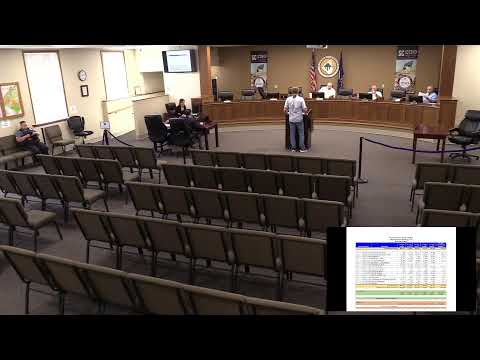
Sheriff Krenshaw told the Budget, Finance and Administrative Committee that personnel drives roughly 80% of the combined cost for the sheriff’s four department budgets and outlined multiple requests to keep services operating amid rising costs. "I operate sheriff's office on about 1.7 million a year currently," Krenshaw said, noting that most of the four budgets are personnel and fringe costs.
Krenshaw said animal control faces higher medical and operational expenses after a large seizure case and is out of funding for its low‑income spay/neuter voucher program; he asked for a $10,000 increase in that program and an overtime budget increase by about $10,000 for the department. He also described a proposal to convert several animal control code officers into sworn deputies so they could enforce state law in municipalities that have not adopted county code; the conversion would cost about $25,000 per position to cover salary, fringe and equipment.
On detention, Krenshaw and Captain Jeremy Chapman told council the jail routinely runs overtime and is seeing rising vendor costs. Chapman said the detention center’s medical vendor currently provides 16‑hour daily coverage at roughly $834,000 and that moving to 24/7 coverage would push the price toward $1.3 million. He also reported unplanned repairs this year (including commercial kitchen equipment) and detailed capital needs including a roof replacement project with an estimated total near $1.2 million.
In the sheriff’s own budget the sheriff requested an internet crimes/child‑protection investigator (budgeted at roughly $87,556) and an upgrade in supervisory ranks to support expanding units, including the PACE and community policing positions funded by a grant. Krenshaw also described recurring costs for K9 care, body‑camera contracts and a small equipment purchase for a portable fentanyl detection device (about $43,000); he said one canine acquisition can cost about $15,000.
Krenshaw told council that the department had committed to ballistic windshield protection for new vehicles but that a backlog remained, and he urged the council to fund a budget amendment to catch up on the retrofit work.
The sheriff framed many requests as attempts to preserve public safety and to keep county services competitive with neighboring jurisdictions as starting pay for deputies rises elsewhere.