Get Full Government Meeting Transcripts, Videos, & Alerts Forever!
Get email alerts on the Instructional Cycle topic
No spam. Unsubscribe anytime.
School leaders describe new instructional cycles and midyear gaps in early grades
Summary
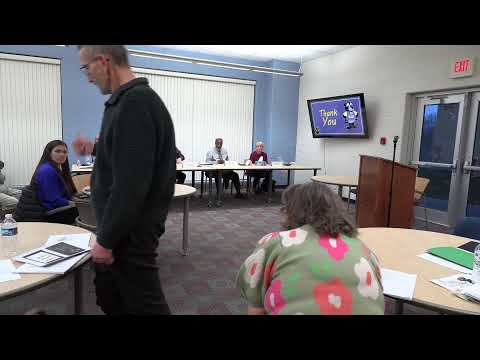
At a special LSSC session at New River Intermediate, school presenters outlined new writing and math instructional cycles and midyear I‑Ready/GSA data showing third grade 11 percentage points behind state math averages and other mixed grade-level results; staff described PLC changes and targeted interventions to close the gaps.
New River Intermediate staff told the Local School Site Council that this year’s top academic priorities are a math instructional cycle tied to Cambium mastery assessments and a pre/post writing cycle designed to improve rigor and measurable growth. Ms. McDonald, the host presenter, said teachers now deconstruct standards, build mastery assessments that mirror the GSA, plan instruction in PLCs, and regroup students based on assessment results to run targeted interventions tracked with i‑Ready.
The school presented midyear comparisons that showed third graders about 11 percentage points behind the state in math and 5 points behind in reading at the middle-of-year checkpoint. "After we build the mastery assessment, teachers plan their instruction ... and from the assessment we create our intervention groups and progress monitor using comprehension checks from i‑Ready," Ms. McDonald said. She and staff noted fourth grade math lags and that fifth grade is outperforming state averages in both reading and math in the middle-of-year snapshot.
Teachers described changes to PLC structures intended to raise instructional rigor. Staff gave examples including a vertical alignment for fourth- and fifth-grade math, combined ELA PLCs to build consistent writing instruction across grades, and Title I joining PLCs to support regrouping after assessments. Brittany Wolf, a staff member who reviewed sample student work with Ms. McDonald, said the school’s case-study practice let teachers surface common weaknesses and craft shared action plans — for example, removing low-DOK items in math and emphasizing context-clue strategies for vocabulary in ELA.
School leaders framed the work as early but measurable: presenters showed writing pre/post data scored on a 10‑point rubric in which third graders improved on posttests and some cohorts outperformed the state on second opportunities. Council members asked no follow-up questions during the presentation; school staff said they will continue to monitor pacing and adjust early-year review to ensure students cover grade-level standards in time for end‑of‑year assessments.
The presentation closed with commitments to continue PLC-based planning, targeted small-group instruction, and ongoing progress monitoring; no formal board motions or votes were recorded in this portion of the meeting.