Get Full Government Meeting Transcripts, Videos, & Alerts Forever!
Get email alerts on the Legislation topic
No spam. Unsubscribe anytime.
Herriman staff outline new state laws and how they affect city procedures
Summary
Staff briefed the council on key bills from the recent legislative session — including HB33 (political signs), HB79 (first-responder immunity), HB236 (tax-increase hearing requirements), HB425 (municipal broadband and utility-fee language), HB535 (disposal of significant municipal real property) and SB284 (land-use and planning-commission changes) — and noted several will require local ordinance or process updates.
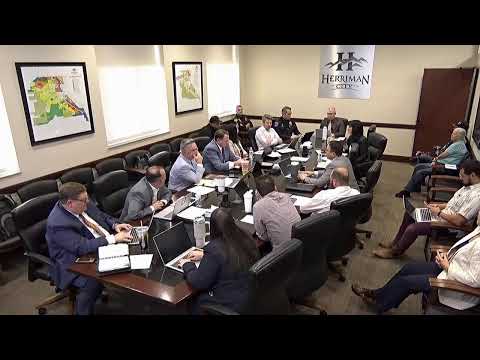
Herriman — At the March 11 work meeting staff summarized several bills from the recent legislative session that will affect city procedures and planning.
Staff characterized the session as unusual and highlighted bills with direct municipal impact. HB33 introduces new requirements for political signs, including clearer disclosure of who paid for signage and a requirement that post-election signs be removed within 14 days; it also requires municipalities to designate a location for gathered signs. Staff said they will provide ordinance language and administrative processes for compliance.
On public safety and liability, staff said HB79 restored certain governmental-immunity protections for first responders after an adverse state-court decision. HB236 will change the process for hearings tied to property-tax increases by requiring preliminary statements about impacts, limiting additional hearings for the same increase and requiring remote access options. HB425 included language that preserved Herriman’s ability to address certain broadband-fee questions and added a process for transportation-utility fees. HB535 creates a process and definition for disposing of significant municipal real property and SB284 contained a package of land-use changes that affect planning-commission training, public-facing checklists and how a commission’s inaction is treated (a failure to make a recommendation can move an application to council).
Staff said some map- and code-related updates will be required, for example to the city’s wildland-urban-interface mapping and to public-facing development checklists. They also said additional ordinance work and training materials for commissioners will be needed to comply with the new statutory requirements.
Next steps: staff will return with specific ordinance amendments, map updates and process recommendations where necessary.