Get Full Government Meeting Transcripts, Videos, & Alerts Forever!
Get email alerts on the Student Housing topic
No spam. Unsubscribe anytime.
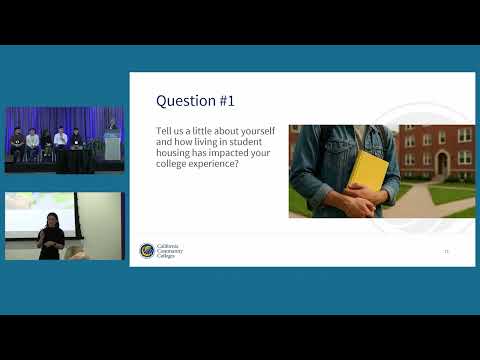
Student panel: on-campus housing builds community and helps students stay enrolled
Summary
Student resident advisers and campus leaders told a panel that on-campus housing boosts academic connection, eases commuting burdens, and expands access to basic-needs supports, though demand far exceeds available beds on many campuses.
Student resident advisers and students at a California Community Colleges panel described how on-campus housing has helped them stay enrolled, build peer networks and access basic-needs supports.
"Immersing yourself in the college experience, living on campus is the most important thing for me," said Zayn, a resident adviser at Orange Coast College, arguing that proximity to classes and campus jobs reduces barriers to persistence. Joanna Jackson, student center president and a resident adviser at Orange Coast College, said common areas and study rooms in the Harbor dorms host club events, study groups and activities that extend campus life into evenings and weekends.
Panelists gave concrete examples of how housing reduces daily hardship. Luis, a resident assistant and basic-needs lead student assistant at California State University, Long Beach, said his campus supports up to 20 students with emergency housing for up to two weeks. Another panelist described Long Beach’s broader context: "we have a campus over 40,000 students at Long Beach, but we only house up to 4,000 students," creating long waitlists and forcing some students into hotels or extended roommate arrangements.
The panel emphasized housing’s role in equity and belonging. Hudson Connors, student trustee at Lake Tahoe Community College, said the new residence hall helped "infuse life into the college," and that housing made it easier for first-generation students to access resident advisors, mental-health resources and food pantries.
Panelists also argued that housing can attract a more diverse student body, including international students and out-of-area students who might not otherwise enroll. "We can attract wider student population and make it more diverse," a panelist said, noting that some students discover colleges specifically because they offer dorms.
The session closed with a reminder that housing programs bring budgetary and operational complexities. Panelists urged administrators to keep students first, preserve affordability and ensure on-campus housing complements — not replaces — the community college culture that serves learners of different ages and life stages.