Get Full Government Meeting Transcripts, Videos, & Alerts Forever!
Get email alerts on the Budget topic
No spam. Unsubscribe anytime.
District hears federal funding risks and state budget upside in briefing by Capital Advisors president
Summary
A legislative advocate told the La Mesa-Spring Valley School Board that recent federal executive orders are largely reporting exercises but funding — especially the effect of a continuing resolution and possible reconciliation — is the chief risk; the board then adopted its Second Interim report after staff outlined local budget assumptions and a $6 million savings effort.
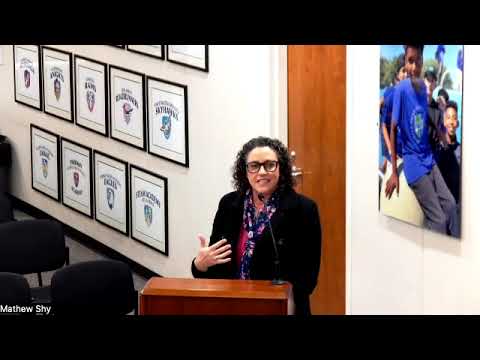
Kevin Gordon, president of Capital Advisors and a legislative advocate, told the La Mesa-Spring Valley School Board on March 11 that many recent federal executive orders ‘‘speak to an issue’’ but often do not change the law immediately, and that the district’s bigger short-term concern is funding uncertainty at the federal level.
Gordon summarized recent federal actions, including an executive order on school choice and one directing a review of the U.S. Department of Education’s functions, and said those directives usually result in reports to the White House rather than immediate changes in program law. "The executive order itself actually doesn't do anything," Gordon said, adding that such actions can nevertheless create pressure and confusion for districts.
Gordon warned the board that a continuing resolution (CR) recently passed by the House would hold funding at prior-year levels through the rest of the current federal fiscal year, but that next year’s funding could face deeper changes if congressional leaders pursue reconciliation. He cited national program budget figures from his presentation — "Title I about $18 billion," and special education "about 15–16 billion" — while stressing those are national totals discussed in his briefing. Gordon also described a recent Office for Civil Rights letter on discrimination that he said could intimidate districts despite unclear legal change.
At the local level, district fiscal staff presented the 2024–25 Second Interim Financial Report and certified the district as "positive" for the three-year outlook. The district report reflected a $6 million in-year budget savings the staff said had been achieved through program and staffing adjustments and reallocation of restricted and unrestricted dollars. Staff emphasized the difference between onetime and ongoing funding: several large state one-time distributions are expected, and the presenter cautioned the board not to budget recurring expenses on one-time funds.
A board member asked for clarification about the CR and timing; Gordon said the CR funds federal programs through the end of the current federal fiscal year and that next-year outcomes depend on later congressional action.
Board questions to district staff focused on the cost-of-living adjustment (COLA) used in the district’s multi-year projections and on enrollment and attendance strategies. Staff said the 2.43% COLA in the report came from the governor’s January proposal and that the district is pursuing marketing, attendance-recovery programs and added TK classrooms to mitigate enrollment decline.
The board moved, seconded and approved the 2024–25 Second Interim Financial Report and the incorporated budget revisions by voice vote. Staff said they will revisit projections after the governor’s May revision and warned that third-year deficits remain a possibility if one-time funds are not sustained.
Clarifying note: during his presentation Gordon said, "we're going to get our per pupil amount of $1.8 billion and you guys will get that in this district one time." The transcript language is ambiguous about whether the $1.8 billion figure was a statewide total or a different measure; district staff characterized the amounts discussed as one-time and per-pupil distributions to districts that will be confirmed in later budget actions.
The board packet shows the district certified a "Positive" certification for the three-year period after accounting for the $6 million savings; staff emphasized conservative budgeting pending the May revision.