Get Full Government Meeting Transcripts, Videos, & Alerts Forever!
Get email alerts on the Public Defense Staffing topic
No spam. Unsubscribe anytime.
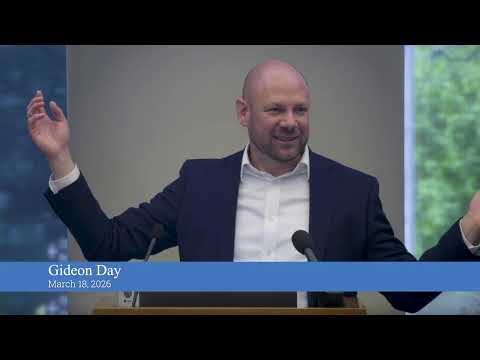
Travis County Gideon Day speakers urge funding for non‑lawyer public‑defense staff
Summary
At a Gideon Day event in Travis County, speakers including Lori James, Mariela Vargas and Anthony Graves argued that social workers, investigators, peer navigators and other non‑attorney staff are essential to making the right to counsel meaningful and urged concrete funding, training and measurement reforms.
A Travis County Gideon Day event honoring the Supreme Court’s 1963 decision in Gideon v. Wainwright brought together public‑defense staff, advocates and an exoneree who all urged investment in multidisciplinary teams that support criminal defense work.
"We are the backbone and together we are Gideon," said Lori James, executive director of the National Association for Public Defense, naming social workers, investigators, mitigation specialists, paralegals and peer navigators as the "core" staff that make effective defense possible. James told the audience that Gideon’s promise is ‘‘only as strong as its core.’’
Why it matters: Multiple speakers pointed to gaps in resources that leave defense teams unable to gather facts, stabilize clients or prepare mitigation — outcomes that can affect case results and, in extreme instances, contribute to wrongful convictions. At the event, organizers highlighted several data points speakers used to underscore the scale of the problem: Lora Ann Gerson noted that, according to a cited study, 50% of Texas counties reported $0 in annual investigator spending for public defense cases; Chantel Pridgon cited a 2008 Kentucky study showing that for every $1 spent on social‑worker salaries the state saved $3 in incarceration costs; and Darwin Hamilton noted that the Texas Indigent Defense Commission (TIDC) funded its first social‑worker position in 2007, at the Travis County Mental Health Public Defender office.
Travis County staff described practical gaps. "Our official job title in Travis County is still Administrative Investigator, even though there is very little about this work that is administrative," said Mariela Vargas, an investigator with the Travis County Public Defender’s Office, describing investigators’ hands‑on work locating witnesses and reviewing evidence and noting pay disparities with prosecution counterparts.
Speakers proposed several non‑mutually exclusive reforms: expand and sustain funding for peer navigators, social workers, investigators and mitigation teams; standardize training and ethics for peer roles; create stronger referral pathways between defender offices and community partners; and measure outcomes like engagement, court appearance rates and housing stability so offices can track what works. Those recommendations were framed as operational steps to make the Gideon right to counsel function in everyday practice rather than remain symbolic.
The event combined personal testimony and policy recommendations. A performance by Robert Lilly opened the program, and organizers displayed historical materials and outreach resources. No formal votes or policy adoptions were taken at the event; speakers were urging policymaking and funding actions by local and state actors.
What’s next: Organizers asked attendees and local leaders to treat today’s remarks as a call to prioritize funding and to include non‑attorney staff in decision‑making spaces so that multidisciplinary defense teams become standard practice rather than the exception.