Get Full Government Meeting Transcripts, Videos, & Alerts Forever!
Get email alerts on the Agricultural Land Leasing topic
No spam. Unsubscribe anytime.
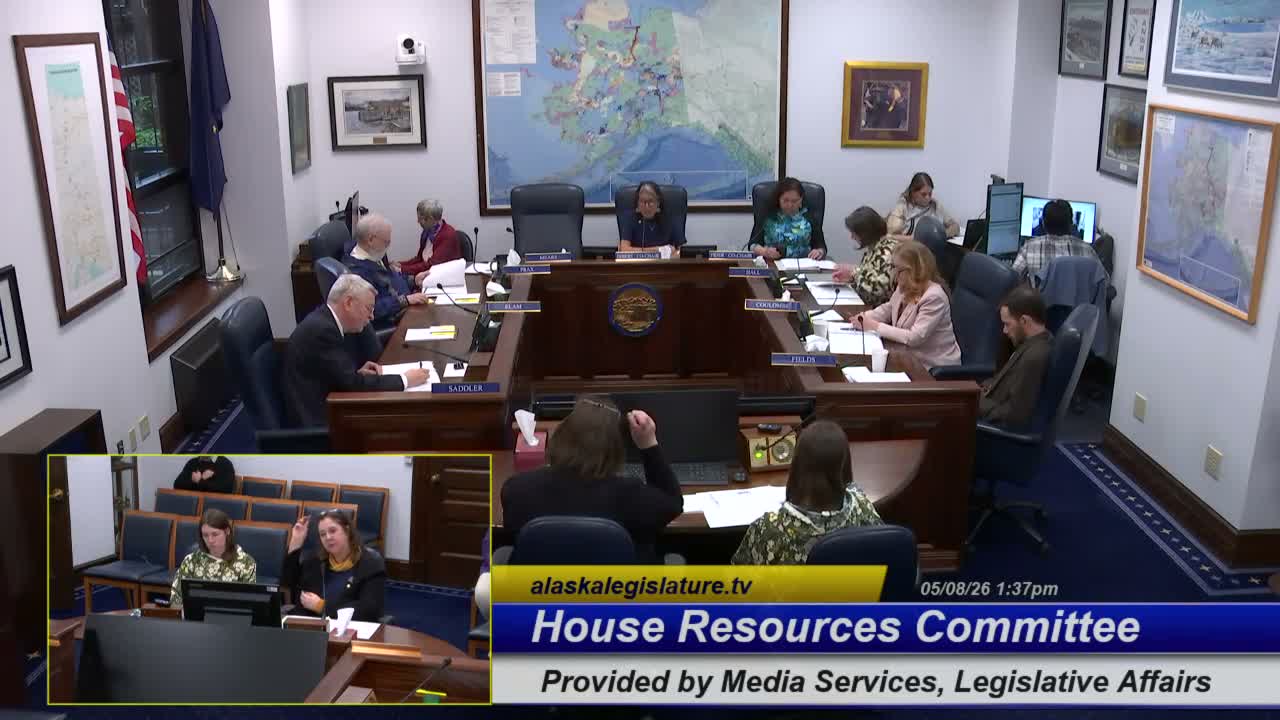
House panel adopts committee substitute to ease access to state agricultural land; bill held for further hearings
Summary
The House Resources Committee on May 8 adopted a committee substitute for HB296 to create a merit-based leasing and sale pathway, allow below-market agricultural leases, and establish civil penalties for covenant enforcement; the CS passed 6–1 and the bill was held over for a later hearing.
Juneau — The House Resources Committee on May 8 adopted a committee substitute for House Bill 296, a package of changes intended to make state-managed agricultural land more accessible and to improve long-term stewardship.
"This bill makes it easier for farmers to lease state land and for the Department of Natural Resources to ensure state land sold for agricultural purposes remains in agricultural production," sponsor Representative Donna Mears said, outlining three principal reforms: a leasing program allowing applicants to rent parcels at below-market rates, a merit-based option for awarding agricultural parcels instead of strictly accepting the highest bidder, and new civil-penalty authority to help the department enforce agricultural covenants.
Farm advocates and producers urged the committee to act. Amy Sykes of the Alaska Farm Bureau told lawmakers that barriers to land access — including high appraisal-driven prices and cumbersome grant processes — prevent new and expanding producers from getting started. Margaret Asitz of Alaska Farmland Trust said the state’s FarmLink has roughly 90 people actively seeking farmland and cited losses of farmland in the Matanuska-Susitna Borough as evidence of rising pressure on high-quality soils.
Farmer Emily Garrity described a specific example: a 27-acre state parcel near her operation, with 4.5 acres of usable field, that was appraised on a development basis and produced a proposed annual lease fee of $9,360 (about $2,080 per acre), a figure she said was prohibitive compared with other crop leases that range from under $1 to about $90 per acre. "Charging over $2,000 per acre per year for the land that we are grown on is not going to get us there," Garrity said.
Agency staff told the committee that soils of importance have been mapped, that agricultural covenants accompany many parcels, and that when land has an agricultural covenant appraisers evaluate agricultural value rather than development value. Rachel Longacre, chief of operations for DNR’s Division of Mining, Land and Water, said the CS clarifies which department officials will administer the program and adds an immediate effective date for drafting implementing regulations; she also noted the bill was vetted with legal counsel to address highest-and-best-use questions and public-interest considerations.
The committee adopted the CS as its working document after a short procedural discussion. The roll-call vote was 6 yeas and 1 nay (Yeas: Representatives Hall, Mears, Fields, Sadler, Colom, Co-chair Divert; Nay: Representative Prox; Co-chair Freer absent). The committee then opened public testimony and received one caller, Rod Arno of the Alaska Outdoor Council, who raised concerns about wildlife habitat and public access if lands are sold into private ownership. DNR staff explained existing statutory obligations to protect access by providing easements around disposals or maintaining section-line connections.
The committee held HB296 over for a future hearing to allow time for follow-up and for staff to provide written clarifications.
What happens next: The committee substitute will be part of the bill text carried forward in subsequent committee action; the sponsor and DNR said they will provide follow-up information on covenants, access easements and region-specific questions.