Get Full Government Meeting Transcripts, Videos, & Alerts Forever!
Get email alerts on the Civics Education topic
No spam. Unsubscribe anytime.
Sen. Gary Stevens and education advocates introduce bill to formalize civics pathways for high-school graduation
Summary
Sen. Gary Stevens introduced SB23 to create a high-school civics graduation requirement with three pathways (course, test or project). Testifiers from iCivics and Alaska school districts said the bill provides flexible, low-cost tools and aligns with state standards; committee members asked for implementation details and data for rural districts.
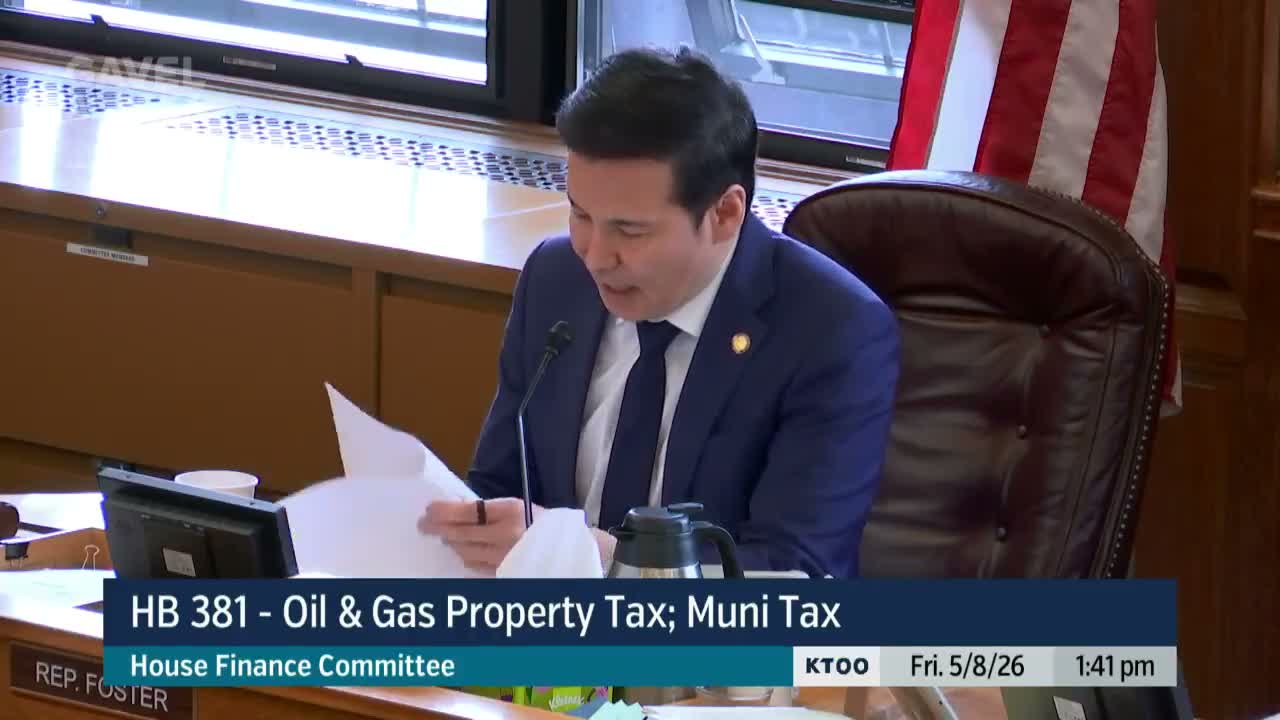
Sen. Gary Stevens introduced Senate Bill 23 to the House Finance Committee on May 8, saying the measure would require students to complete one of three civics pathways — a semester course, pass a civics test, or complete a project — before graduating high school. Stevens told the committee the bill tasks the State Board of Education with compiling and publishing free curriculum resources to help districts implement the requirement.
"It calls for an establishment of a civics program graduation requirement where students have to do one of three things," Stevens said, adding the measure aims to revive civic knowledge and participation among younger Alaskans. He described the proposal as compatible with national models and said many curriculum resources already exist.
Sean Healy, chief policy and advocacy officer at iCivics, told the committee the organization supports SB23 and pointed to national testing data showing dedicated civics instruction improves student performance. "States across the country are embracing civic learning as a means to strengthening and sustaining our constitutional democracy," Healy said, noting iCivics’ scan showing 37 states require a high-school civics course and 29 states include some form of assessment.
Dr. Cindy Mica, superintendent of the Kodiak Island Borough School District, said Kodiak already requires a half-credit civics course and that the district’s curriculum aligns with the standards in SB23. "This is a practical and cost-effective approach that supports both consistency and local flexibility," Mica said, praising the bill’s options for course, test or project demonstration.
Susan Nedza, superintendent for Hoonah City School District, said Hoonah added two semesters of civics last year and integrates tribal government and local heritage into instruction. She said SB23’s pathways and the department’s promised free resources would ease burdens on smaller districts: "This allows all types of schools and all types of students to meet this very important requirement without undue burden."
Members asked questions about which districts already require civics, how charter and homeschool programs would be treated, and whether the Alaska Performance Scholarship could be aligned with the requirement. Staff answered that the bill codifies existing state standards, directs the Department of Education to post curated open educational resources, and preserves multiple options for students to demonstrate mastery. Committee members requested district-by-district data and implementation guidance for rural communities.
The committee set SB23 aside to return with questions answered and additional supporting data; no final action was taken today.