Get Full Government Meeting Transcripts, Videos, & Alerts Forever!
Get email alerts on the Marine Debris topic
No spam. Unsubscribe anytime.
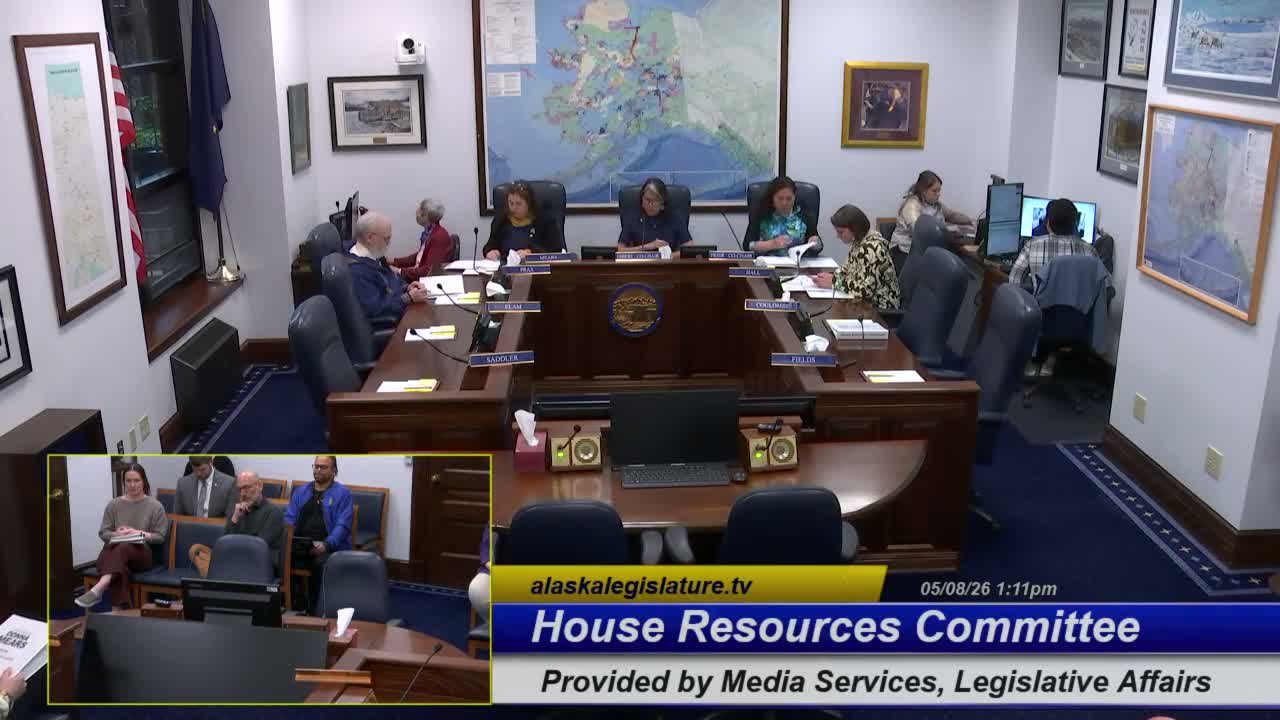
Sen. Jesse Bjorkman urges federal funding for marine debris cleanup; House Resources Committee advances resolution
Summary
Sen. Jesse Bjorkman told the House Resources Committee May 8 that marine debris threatens Alaska shores and urged federal funding for prevention, clean-up and backhaul programs; Ocean Conservancy testimony detailed costs and a recent EPA/STAG grant and the committee moved SJR20 out of committee.
Juneau — Sen. Jesse Bjorkman told the House Resources Committee on May 8 that foreign and domestic marine debris is littering Alaska’s shores and urged the congressional delegation to seek federal funding for prevention, cleanup and backhaul programs.
"Communities across the state depend on the ocean for food, employment, and our way of life," Bjorkman said in presenting Senate Joint Resolution 20, citing debris identified from Russia, China, Italy, Malaysia, Canada, Singapore, Taiwan and the lower 48 states. He said only an estimated 6% of Alaska’s roughly 44,000 miles of coastline has been cleaned since organized efforts began in 2006.
The committee heard invited testimony from Michael Levine, senior director for Ocean Conservancy in Alaska, who described the nonprofit’s coastal cleanup work and the heavy logistical costs for rural removals. "Last year alone, we documented that more than 1,500,000 pounds of debris were removed from Alaska shores," Levine said, and he outlined a backhaul effort to move debris from rural communities to southern ports for recycling or landfilling.
Levine said much of the work has been supported by federal funding, particularly from the National Oceanic and Atmospheric Administration and the Environmental Protection Agency, and described a recent EPA State and Tribal Assistance Grant reported as roughly $1,700,000 over three years to expand shipping, sorting and storage work and to support local staff.
Committee members asked about international coordination and whether fisheries councils or industry fees could address lost fishing gear. Levine said marine debris is a global problem and that industry has in many cases been a partner, but there is no comprehensive federal mechanism to assess the commercial fishing industry for cleanup costs and attribution of lost gear is difficult.
With no public testimony for the resolution, the committee closed public comment and advanced the committee substitute for SJR20 from committee without objection.
What happens next: The committee’s action sends SJR20 to the next step in the legislative process; the resolution urges federal agencies and the congressional delegation to provide funding and support for prevention, cleanup and removal of marine debris affecting Alaska’s shoreline.