Get Full Government Meeting Transcripts, Videos, & Alerts Forever!
Get email alerts on the Municipal Budget topic
No spam. Unsubscribe anytime.
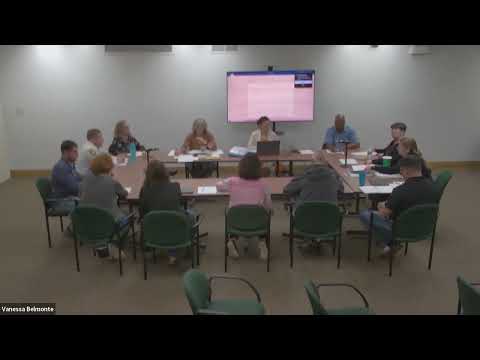
Forest Park officials say FY2025 likely to end with a $2 million shortfall; restaurant tax revived as a revenue option
Summary
Village finance staff told commissioners the general fund faces about a $2 million year-end deficit after state changes to use-tax distribution; officials discussed a 'places of eating' tax (1% ≈ $500,000) and asked staff for updated impact analyses and an implementation plan.
Forest Park finance staff reported that preliminary year-end projections for fiscal 2025 show the village moving from recent surpluses to “right around $2 million” in general-fund deficit, largely because state-shared revenues and one-time grants have declined.
“We had looked potentially to have a deficit of 2.9 million. Um looks like it’s going to be right around $2 million deficit for the end of this fiscal year in the general fund,” said Tish, a finance staff member who presented the forecast and who told the council the village is still conservatively estimating revenues and reconciling invoices through the June liability date.
A major revenue shock came from a January 1, 2025 change in how local use tax is allocated, Tish said, citing notices from the Illinois Municipal League and the Illinois Department of Revenue. “Only things purchased from Forest Park that are delivered to Forest Park will we receive this use tax,” she said, and staff estimated at least a $350,000 annual reduction in receipts compared with prior allocations (the village previously received roughly $550,000 in annual use-tax allocation under the old distribution).
The village also faces higher mandated pension contributions (staff said roughly $900,000 of property-tax receipts were allocated to pension funds), and several grant sources cited as uncertain or paused—including tree-canopy and FEMA building-code grants and a Medicaid-related grant stream—create additional downside risk to the general fund.
Commissioners discussed potential revenue options to close the gap. Commissioner Max and proponents revived a proposal to study a places-of-eating tax—sometimes called a restaurant or meals tax—pointing to prior estimates that a 1% levy could yield about $500,000 a year and a 2% levy roughly $1 million. “If we did a 1% it would be $500,000 a year and a 2% a million dollars a year,” Commissioner Max said, while other commissioners asked staff to re-run comparables with updated economic conditions and to model distributional effects on lower-income residents and small businesses.
Staff warned the council that a places-of-eating tax requires an ordinance, a timeframe for businesses to update point-of-sale and reporting systems, and village capacity to collect and enforce payments (unlike some state-shared taxes, collections for this tax would be handled locally). Commissioners suggested exploring ways to allocate a portion of new revenue to marketing or small-business supports to mitigate adoption concerns.
Next steps: staff will prepare updated revenue estimates and impact analyses, including comparables from nearby municipalities and an implementation timeline; the council scheduled at least two more budget meetings to review draft budgets and the analyses before any ordinance language is drafted or formally introduced.