Get Full Government Meeting Transcripts, Videos, & Alerts Forever!
Get email alerts on the City Governance topic
No spam. Unsubscribe anytime.
Muskego council seeks a reset on decorum, clarifies open‑records and staff interaction rules
Summary
At a March 10 committee meeting, Muskego alder persons heard guidance from outside counsel on mayor–council roles, meeting decorum and when social‑media and texts may be public records; members agreed to seek written legal guidance on agenda control and mayor’s comments.
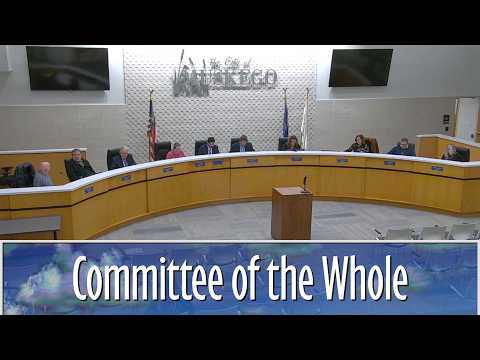
MUSKEGO — At a March 10 meeting of the Muskego City Committee of the Whole, outside counsel reviewed the legal roles of the mayor and alder persons, urged clearer decorum rules, and warned that social‑media posts and personal communications about city business can be subject to open‑records requests.
Nick Serwin, who identified himself as counsel with Bon Breezen and Roper and said he was standing in as city‑council counsel for the session, told the council the mayor functions as the executive and the common council acts as a unified legislative body. "You all operate as a mayor–council governance," Serwin said, explaining that the council makes policy collectively and no single member can unilaterally create policy.
Serwin cited the council's statutory authority and the mayor's presiding role, and he stressed procedural practices that reduce confusion: recognizing speakers, directing remarks to the chair, and using the council's code provisions such as section 67.18 on deliberations. "If you get on Facebook and start commenting on something that's related to this job, that is a record that could be created," he said, warning members those communications may trigger retention and disclosure obligations.
Why it matters: Members said the goal of the session was a "reset" after a year of meetings that some described as disorderly. Several alder persons urged more civil, concise exchanges and better adherence to being recognized before speaking so the public can follow decisions and staff are not placed in awkward positions.
The meeting included extended Q&A about the practical difference between asking staff for information and directing staff to take action. Serwin said asking for information or requesting staff look into a complaint is a reasonable practice, but individual alder persons should not instruct staff to act on policy matters; those directions should come from the council as a whole or be routed through the mayor. He also cautioned that the city's staff is lean and members' requests should account for staff workload.
On social media and public records, Serwin and others told members that the medium does not change the legal analysis: "If you're talking about city business that affects the citizenry ... it's an open record," a participant summarized during the discussion. Members asked whether officials would be notified when records requests are made; the answer was that notification is required only in limited circumstances (for example certain personnel records). Serwin advised caution to avoid mixing personal and official postings, which can broaden discovery in litigation or records searches.
Agenda control and mayor's comments drew separate debate. Several alder persons said delegating agenda control to the mayor had made one person a gatekeeper; others asked for transparent processes to allow members to place items on future agendas. The mayor said he would seek a legal opinion on whether the practice of "mayor's comments" should include bullet points or be otherwise formalized.
Formal actions: The committee approved minutes from Oct. 14, 2025, and Dec. 16, 2025, and earlier voted to convene in a closed session under Wis. Stat. §19.85(1)(c) for personnel discussion; the closed session vote was taken by roll call and the motion passed.
What’s next: The mayor and council agreed to request a written legal opinion on agenda‑setting practices and the content required for mayor's comments. No binding policy changes were adopted at the meeting.
Quote: "We're broken — we are not functioning well as a group," one council member said during the discussion, framing the session as a chance to improve meeting conduct.
The meeting convened at 7:52 p.m. and adjourned at 9:07 p.m.