Get Full Government Meeting Transcripts, Videos, & Alerts Forever!
Get email alerts on the Cannabis Revenue topic
No spam. Unsubscribe anytime.
Social Equity Council warns SB405 diversion would undercut community reinvestment
Summary
Brandon McGee of the Connecticut Social Equity Council told the Public Safety and Security Committee that section two of SB405, which would divert 5% of cannabis tax revenues, would weaken the council’s R2 community reinvestment program and reduce investments in justice‑impacted communities and youth initiatives.
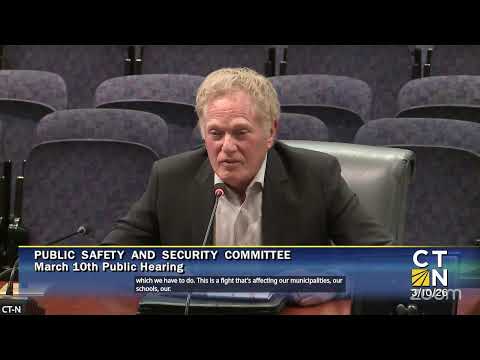
Brandon McGee, chief executive officer of the Connecticut Social Equity Council, testified that he opposes section two of Senate Bill 405 because it would “divert 5% of the cannabis tax revenue from the social equity and innovation account” to fund impaired‑driving enforcement and training, a move he said “would weaken the council’s re‑imagine and revitalize community reinvestment program.”
McGee told the Public Safety and Security Committee that the council relaunched its R2 community reinvestment program in June 2025 and committed “over $36 million over three years,” roughly $12 million annually, to advance economic growth across 10 priority regions that together include “194 of Connecticut’s 237 disproportionately impacted census tracts.” He said those investments and a capacity‑building curriculum for youth‑serving organizations are funded from one off‑budget account, and that diverting revenue would reduce staffing and program capacity tied to that account.
Representative Greg Howard pressed McGee on the bill’s intent, noting lawmakers often direct user fees or industry revenue to offset associated public costs. McGee replied that the social equity account is not intended to cover enforcement costs: “the original intent of this account was not to offset anybody’s budget to but rather support investments into these communities,” and he cautioned that taking funds from the account would “open the door for additional requests of funding.”
McGee said the council is willing to engage on program design to address prevention and recovery needs, but asked legislators to preserve the account’s reinvestment purpose rather than diverting a fixed percentage for enforcement. Committee members did not take a vote on SB405 during the hearing; McGee said he would be available for follow‑up meetings.
The committee heard no formal motions or votes on SB405 at the March 10 hearing. The bill’s language and committee next steps were left for further discussion.