Get Full Government Meeting Transcripts, Videos, & Alerts Forever!
Get email alerts on the Biofuels topic
No spam. Unsubscribe anytime.
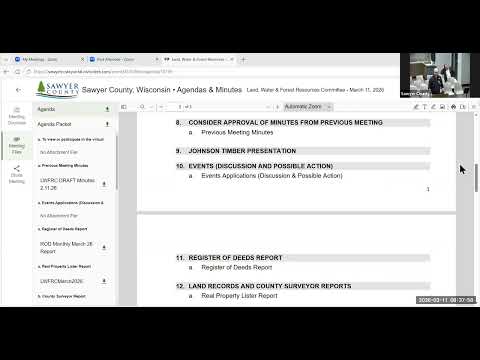
Johnson Timber pitches $1.7 billion woody-biomass sustainable aviation fuel project for Hayward
Summary
Johnson Timber told Sawyer County officials it is pursuing a proposed $1.7 billion woody-biomass-to-sustainable aviation fuel facility in Hayward that would use roughly 900,000 tons of wood per year, produce about 48 million gallons of SAF and create regional economic activity if feasibility studies and offtake agreements are secured.
Johnson Timber representatives presented a proposed woody-biomass facility in Hayward that they said would convert regional timber residuals into sustainable aviation fuel and related products.
Bill Johnson of Johnson Timber said the project "is about a $1.7 billion capital expenditure to build a gasification and fisher tropes facility" and that, at capacity, the plant would use roughly 900,000 tons of woody biomass a year to produce "about 48 million gallons of sustainable aviation fuel and about 20 million gallons of naphtha/waxes." He said WEDC and other partners estimate an annual regional economic impact in the hundreds of millions and the potential for roughly 2,200 direct and indirect jobs.
DJ Adman, president of Futurewood Corp., which Johnson said would procure fiber for the plant, described the state of the regional forest-products market and a long-term fiber approach: "This plant will use roughly 900,000 green tons when it gets up to capacity," he said, and the companies plan to source material from a roughly 150-mile radius while following biomass harvesting guidelines.
Presenters said the project team is pursuing state support, including provisions in a pending forestry revitalization act that would provide refundable tax credits and require feasibility review and an offtake agreement. Johnson said those tax credits and other incentives would be contingent on completion of WEDCs feasibility study and other conditions; he noted the assembly had passed a version of the bill and the Senate was expected to consider it soon.
Committee members asked about market diversity and regulatory standards. DJ Adman said the developers had been in talks with international and domestic offtakers, including parties in the U.K. and E.U., and were pursuing multiple potential buyers and certification pathways such as Corsia to validate carbon-intensity claims. The presenters acknowledged that more work remains: feasibility and offtake commitments must be finalized before state incentives would be released.
The presentation included detail on targeted feedstock ("unmerchantable tops, slash, branches, chips, sawdust, mill residuals and low market value pulpwood"), prior industry experience, and a 20-year fiber-supply approach they said would support contractor financing and supply stability.
The committee asked clarifying questions but took no formal action on the proposal during the meeting. Presenters said the fuel would initially be exported to U.K. and EU markets and that project partners have studied commercially proven gasification and Fischer-Tropsch pathways to assemble a technology-agnostic design.