Get Full Government Meeting Transcripts, Videos, & Alerts Forever!
Get email alerts on the Community Solar topic
No spam. Unsubscribe anytime.
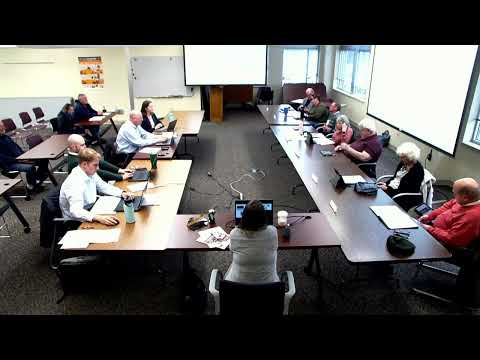
McHenry County Zoning Board continues Corver Solar hearing after wetlands, tree‑clearing and access questions
Summary
The McHenry County Zoning Board of Appeals continued a conditional‑use hearing for Corver Solar LLC’s proposed 4‑MW community solar project (Z250097), asking the developer for a level‑two wetland delineation and a more detailed tree survey before voting; the board set a date certain of May 6 for follow‑up.
The McHenry County Zoning Board of Appeals on April 1 continued a hearing on a conditional‑use permit for a proposed community solar facility at 7716 U.S. Route 14, citing unresolved questions about wetlands, tree clearing and access.
Attorney Savannah Barlo, representing Corver Solar LLC (a Cultivate Power subsidiary), told the board the project would build a roughly 4‑megawatt solar farm on about 24 acres inside a larger 36–37‑acre parcel and estimated the installation could power about 900 homes. "The project includes the development of a solar energy facility of up to four megawatts of generating capacity," Barlo said, and the application projects approximately $660,000 in lifetime tax revenue with a large portion going to local schools.
Paul Bottom, lead developer for Cultivate Power, described site design details including single‑axis tracking panels, a 7‑foot perimeter security fence, 50‑foot lot‑line setbacks and a 150‑foot buffer from non‑participating residences. He said the team has executed an Agricultural Impact Mitigation Agreement (AMA) with the Illinois Department of Agriculture and has an interconnection agreement with Commonwealth Edison that will require an approximately one‑mile overhead line extension.
Environmental consultant Michael Jheim of Kimley Horn presented a level‑one inventory of trees and an initial wetland assessment. He said the survey documented 2,393 trees with roughly 414 counted as "notable" species, and called out 66 oaks and hickories (five of which exceed 12 inches in diameter at breast height). "We identified five oaks or hickories with a DBH of greater than 12 in," Jheim said. The applicant described a range of mitigation options under McHenry County rules — from pile‑driven foundations that leave minimal permanent footprint to full mitigation where grading and replacement plantings are required.
Board members repeatedly pressed the applicant for sharper, field‑verified data. Commissioner Bill Kern asked for specifics about wetland impacts and what "practicable" avoidance and minimization would mean in practice: "What the heck is practicable?" he asked. The project team said their current figures reflect a level‑one (pre‑growing‑season) assessment and that a level‑two delineation in the growing season and a more detailed tree survey would provide the certainty the board sought.
Neighbors also raised concerns. Resident Tim Fennel asked whether the applicant could guarantee that battery energy storage would not be added later; the developer said such storage would require its own permitting process and a return to the board for approval.
Because the wetland delineation and tree inventory were only recently completed and remain preliminary, the board accepted the applicant’s offer to continue the hearing so staff and the consultants could complete field work and re‑review the materials. A motion to continue to May 6 passed on a voice/roll‑call vote with seven in favor.
What happens next: the applicant agreed to complete a level‑two wetland delineation during the county’s growing‑season window (or demonstrate equivalent field conditions) and a more detailed tree survey; staff will re‑review the updated reports prior to the May 6 meeting. If the applicant prefers, the board could consider conditions or plan amendments tied to the delineation and the shading/tree analyses before any final decision.
Authorities and regulations referenced at the hearing included the project application’s cited McHenry County solar ordinance (section 16.56.030), the AMA with the Illinois Department of Agriculture, and McHenry County’s storm‑water and wetland mitigation requirements. The applicant said it will post financial assurance in accordance with the AMA schedule and comply with any county mitigation ratios identified after the level‑two field work.
The board’s continuance preserves the record while the county and the applicant get firm, field‑verified data about wetlands, trees and shading effects that would determine the scope of mitigation and any site changes required before a final conditional‑use vote.