Get Full Government Meeting Transcripts, Videos, & Alerts Forever!
Get email alerts on the Local History topic
No spam. Unsubscribe anytime.
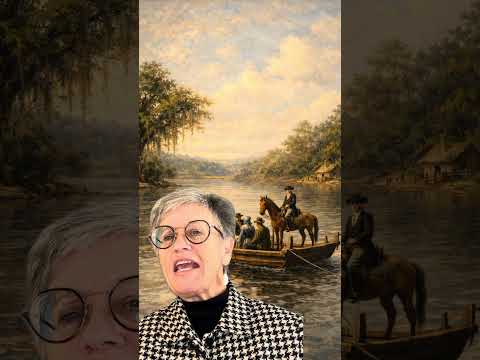
Presenter recounts Georgetown County's colonial ferry history
Summary
A presenter outlined how ferries shaped travel in Georgetown County, citing 1709 colonial laws, named crossings such as Brown's Ferry and Potato Bed Ferry, historical fares (1 pence and 2 pence), and how ferries, roads and railroads affected the county's economy and culture.
In a brief historical presentation, a presenter described the central role ferries played in Georgetown County's early transportation network, saying the county's many rivers and marshes made overland travel difficult and created a practical need for water crossings.
The presenter said that by 1709 "the colony had created laws that governed not only the operation of ferries, but also the location of ferries and the appointment of ferry masters," noting that adjacent property owners often received licenses and commonly hired ferry masters, frequently "using one of their own enslaved men." These regulations, the presenter said, formalized crossing points that later shaped local roads and settlement patterns.
The talk listed surviving place names as evidence of that legacy. The presenter cited Brown's Ferry and Potato Bed Ferry on the Black River, and a ferry that formerly ran from Calais Plantation at Hobcaw Barony across Winyah Bay to Dover Plantation on the bay's west side, saying such names "remind us of this style of transportation." The presenter also recounted growing up near Garner's Ferry Road outside Columbia, which traces a route to the Wateree River and on to Sumter, illustrating how ferry crossings influenced later road alignments.
Using specific fare examples from historical records, the presenter said a single person paid one pence to cross, while a person with a horse paid two pence; in some cases, "if a man rode on the ferry and tied his horse to the ferry, the horse traveled free with the ferry," the presenter said. The presenter used these details to convey the everyday logistics and costs of colonial crossings.
The presentation closed by placing ferries in a broader transportation narrative: despite the difficulty of travel, residents commonly journeyed to port cities such as Charleston and Wilmington, and the presenter said that "our roads, our ferries, our later our railroads made a big difference in the economy and in the culture." The presenter framed these developments as key factors shaping Georgetown County's geography, economy and social connections.
No formal vote or decision followed the talk; it consisted of a historical overview and local anecdotes.