Get Full Government Meeting Transcripts, Videos, & Alerts Forever!
Get email alerts on the Data Centers topic
No spam. Unsubscribe anytime.
DEEP backs bill to limit collocated generation for very large loads; lawmakers press ISO, PURA roles
Summary
DEEP told the committee HB5469 would create rules of the road for large loads and collocated generation ( >50 MW) to avoid shifting costs to other ratepayers. Legislators asked how ISO New England and PURA would handle interconnection, replacement capacity, and environmental safeguards for backup generation.
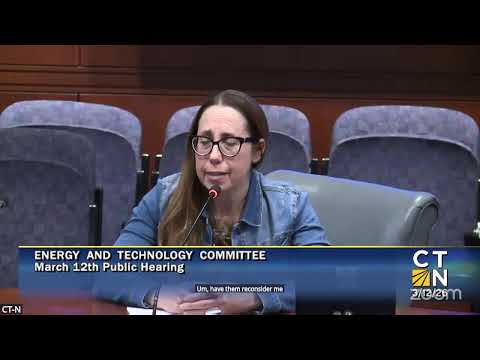
House Bill 5469 was one of the first items the Energy and Technology Committee considered at its final public hearing. DEEP Commissioner Katie Dykes and energy officials described the bill as a forward‑looking framework for preventing cost shifts from very large electric loads — such as hypothetical hyperscale data centers — that could be served by collocated generation at existing plants.
DEEP said the legislation would bar existing generation from serving large loads unless the project brings new generation that complies with renewable portfolio standards; it would also require utilities to develop large‑load tariffs for PURA review. The bill targets behind‑the‑meter arrangements that could remove capacity from the regional market and cause price shocks if replacement resources are not procured.
Lawmakers pressed DEEP and utility witnesses about the practical role of ISO New England’s interconnection and capacity markets. DEEP officials warned that the type of rapid build‑out seen in PJM has created interconnection queue failures and upward pressure on capacity prices — a risk Connecticut should avoid by creating clear rules now. DEEP and its technical staff offered follow‑up briefings for municipalities on backup generators, emissions controls and the interaction with municipal utilities.
The committee did not vote on the bill. Members requested additional briefings on tariff design, municipal utility participation and how PURA would handle cost recovery and environmental compliance for backup generation.
Ending: The hearing closed with plans for technical follow‑ups on interconnection policy and a confirmation that the committee will refine statutory language to clarify PURA’s tariff role and environmental protections before any mark‑up.