Get Full Government Meeting Transcripts, Videos, & Alerts Forever!
Get email alerts on the Energy topic
No spam. Unsubscribe anytime.
Clean Power Alliance lays out local grants, rate moves and a solar-plus-battery project for Sierra Madre
Summary
Clean Power Alliance told Sierra Madre officials about local programs — from EV smart-charging to a Sun Storage rebate — and described a Power Ready solar-and-battery installation planned for City Hall, police and fire critical loads, with construction targeting later this year.
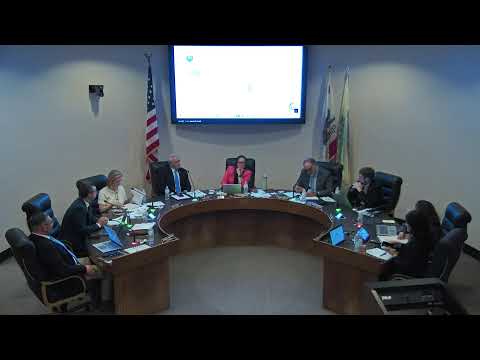
Clean Power Alliance representatives presented a multi-part briefing to the Sierra Madre City Council on the agency’s rate changes, local programs and a planned Power Ready resiliency project that would add solar panels and battery storage at city facilities.
Dalia Gomez, CPA’s external affairs manager, said the agency serves more than 1 million customer accounts across Los Angeles and Ventura counties and that Sierra Madre’s participation rates are among the highest in CPA’s service territory. "We serve Sierra Madre and more than three million residents and businesses across our territory," Gomez said. She outlined CPA’s role as the electricity generation provider while Southern California Edison continues delivery and meter services.
Karen Smith, CPA senior director for rates and strategy, reviewed recent rate movements and explained that CPA had taken actions earlier in the year to offset sizable PCIA increases that had raised customer bills. "Our board acted to lower generation rates in January to bring customer bills back in line," she said, answering council questions about the effect of evolving PCIA charges and transmission cost trends.
John Spectre, CPA program manager for resiliency programs, described the Power Ready project planned for Sierra Madre. Spectre said design and site-lease agreements are in place with the project developer, permits were submitted in late February, and the project team is tracking a construction timeline that would start mobilization in April and target permission-to-operate by year-end. He said City Hall, police and fire department critical loads — including the emergency operations center, select 911 loads and the IT server — have been designated for guaranteed backup power from the system.
Spectre described how CPA will guarantee a portion of battery capacity be reserved for backup at all times, with the other cells used for daily grid optimization. "We will make commercially reasonable efforts to charge the battery in advance of planned public-safety power shutoff events so backup duration is extended," he said, and added practical design notes such as automatic transfer switches and site containment of islanded solar during outages.
CPA also publicized local customer-facing programs: an Energy Team that provides planning and contractor referrals; an EV Smart Charge app that CPA estimates can save about $100/year for participating EV owners; a Sun Storage rebate ($750 with additional incentives for low-income or high-fire-hazard-zone customers); and a Power Response demand‑response program to reduce load during peak events. CPA’s local community-investment plan was described as $200 million in planned investments in electrification, resiliency and local energy procurement across CPA’s member agencies.
Council members pressed CPA about long-term transmission costs and what federal policy changes might mean for future procurements. CPA staff said existing long-term purchases provide price certainty for contracts out to 2030 and that they are now beginning procurement outreach for post‑2030 supply.
What happens next: CPA will continue coordination with city staff on permitting and pathway-to-construction milestones; council asked staff to return with details about permitting timing and any needed council approvals for final site work.