Get Full Government Meeting Transcripts, Videos, & Alerts Forever!
Get email alerts on the Tlingit Language Program topic
No spam. Unsubscribe anytime.
Juneau’s Tlingit language and literacy program showcases curriculum, warns of ending grant support
Summary
Juneau School District presenters described the Tlingit Culture, Language and Literacy program’s efforts to integrate Tlingit into early literacy instruction, produce 60 children’s books and develop assessment tools; staff said some positions are funded by a Sealaska Heritage Institute grant that expires in September.
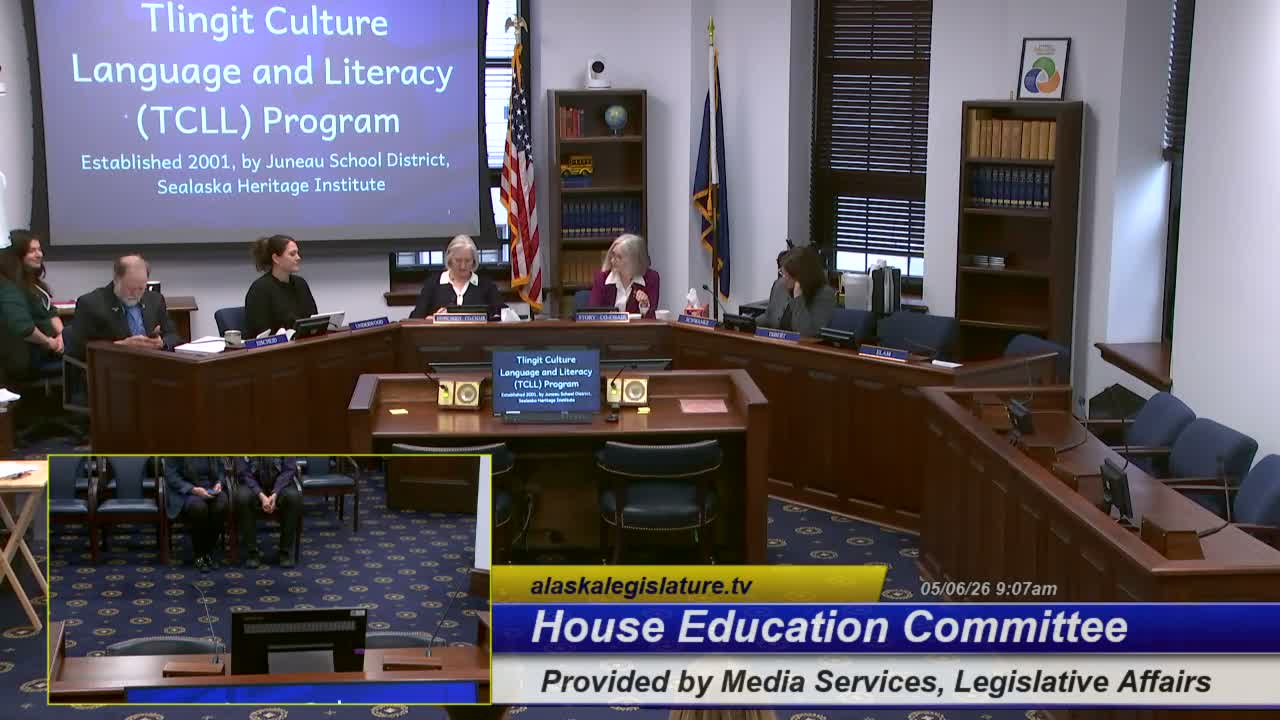
Juneau — Teachers and leaders from the Juneau School District’s Tlingit Culture, Language and Literacy (TCLL) program presented to the House Education Committee on May 6, showing classroom work, assessment development and community partnerships while noting funding vulnerabilities.
Nakashan Hans Chester, who identified himself as born and raised in Juneau and a TCLL educator, described staffing across kindergarten through fifth grade: classroom teachers, a principal, elders who support instruction and paraeducators. "We are currently fully staffed right now with a principal of our own, a classroom teacher in K–5 each classroom has a language teacher, with one vacancy, and we have three elders who work with us," Chester said.
Chester outlined curricular and assessment work: developing lesson maps, establishing syllable‑division patterns for Tlingit phonics, and contributing to the LSAIL project (Literacy Screeners for Alaska Indigenous Languages) in partnership with the University of Oregon. He said the program is producing 60 children’s books in Tlingit tied to the curriculum and will field‑test high frequency‑phrase assessment tools and a Corephonics screener.
Teachers on the panel described long service to the program and instructional innovations; Jessica Chester said she has worked with TCLL for about 19 years. Presenters acknowledged that several positions are funded through a Sealaska Heritage Institute grant that "is running out at the end of this September," and said sustained support will be needed to maintain staffing and materials.
Students performed songs for the committee, and members praised the program’s integration of culture and literacy. Rep. Story called the program "exemplary" and encouraged committee members to follow up with detailed questions via his office.
Next steps: Committee members congratulated the presenters and noted the program’s funding gap; staff said they would accept follow‑up questions and additional materials. The committee adjourned at 9:52 a.m.