Get Full Government Meeting Transcripts, Videos, & Alerts Forever!
Get email alerts on the Reaa 50th Anniversary topic
No spam. Unsubscribe anytime.
House Education Committee recognizes 50th anniversary of REAAs, hears rural school needs and funding concerns
Summary
Sen. Tobin and invited superintendents told the House Education Committee that Regional Educational Attendance Areas have anchored rural education for 50 years; witnesses praised local control but warned that transportation, utilities and residential funding remain fragile and require sustained state support.
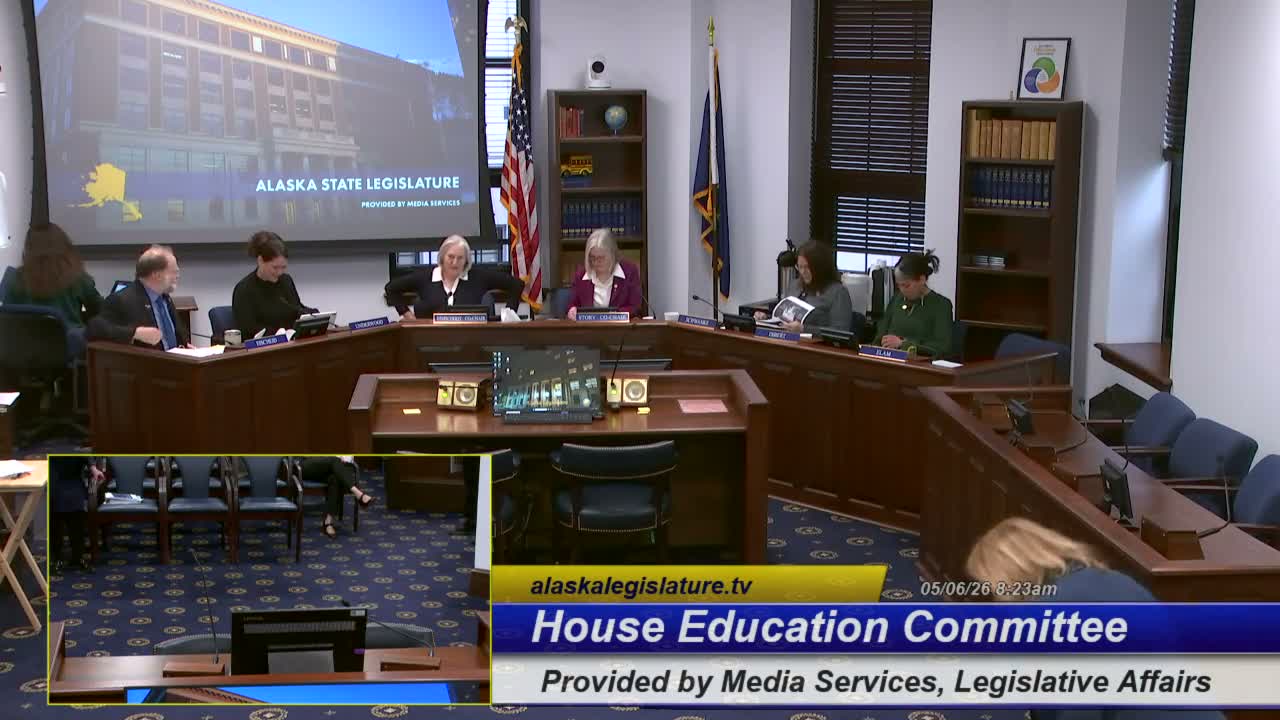
Juneau — The House Education Committee on May 6 heard a presentation and invited testimony supporting Senate Concurrent Resolution 17, which recognizes the 50th anniversary of Alaska’s Regional Educational Attendance Areas (REAAs) and highlights their role in rural education and community life.
Sen. Lukey Gale Tobin, chair of the Senate Education Committee, described REAAs as an historic response to a patchwork of municipal, state and Bureau of Indian Affairs schooling and said REAAs were designed to restore local control and community leadership. "The idea was to bring education back to local control," Tobin said during his remarks.
Madeline Aguilar, superintendent of the district identified in the record as "Cussbuck" School District, REAA No. 5, testified in favor of SCR 17. "REAA's were never just about operating schools in remote places," Aguilar said. "They were also about making sure rural communities had ownership, voice, and local leadership in public education." She described REAAs as community anchors that provide culturally rooted instruction and noted the logistical challenges of weather, travel and high operating costs.
John Hargis, superintendent of the Lower Yukon School District, told the committee the REAA model is essential for Alaska’s most remote students and cited measurable gains: "Our graduation rate increased from 65.9 percent to 77.6 percent," he said. Hargis warned such gains are fragile without predictable, sustained funding for transportation, residential programs, broadband and utilities. He also said REAAs receive no local tax revenue and rely on state and federal funds.
Marshall Lind, chancellor emeritus and an invited public testifier, urged support for the resolution and described REAAs’ broader role as regional centers for community life and emergency response. Senators and representatives praised REAAs’ role in sustaining local culture and education and moved SCR 17 from committee with attached fiscal notes and recommendations.
Next steps: Rep. Story moved SCR 17 with attached fiscal notes; with no objections the resolution moved from committee. The committee record includes testimony underscoring persistent funding and staffing challenges in rural districts and a call for continued state support.