Get Full Government Meeting Transcripts, Videos, & Alerts Forever!
Get email alerts on the Transportation topic
No spam. Unsubscribe anytime.
Industry groups urge Senate committee to reject plan to toll Dalton Highway
Summary
At a May 7 Senate State Affairs hearing, trucking and oil-industry witnesses told senators that Senate Bill 286—6 proposes a two-mile toll on the Dalton Highway that would be legally risky, administratively complex and could jeopardize federal funding; the committee kept public testimony open.
Industry representatives told the Senate State Affairs Committee on May 7 that Senate Bill 286, which would place a toll on a two-mile stretch of the Dalton Highway targeted at oil and gas traffic, would create legal, financial and operational problems and risk federal funding.
Several witnesses representing trucking companies, contractors and industry associations urged rejection of the bill, saying it functions as a targeted fee on a single industry rather than a broad user charge. "This is a lawsuit waiting to happen," said Cody Heiss, vice president of Specialized Transport and Rigging, describing the bill's reimbursement and legal-recourse provisions.
The Alaska Trucking Association's president, Jamie Benson, told senators the proposal would force trucking firms to front toll payments, pursue reimbursements and potentially litigate to recover costs, adding administrative burden and uncertainty across supply chains. "If the state begins charging select users for access to public infrastructure, where does it end?" Benson asked.
Greg Miller, incoming president of the Alaska Support Industry Alliance, and Rob Christensen of Sourdough Express warned the committee that the Dalton Highway is a federal-aid highway and that converting a toll-free, federally supported route to a tolled segment could jeopardize federal funds that currently cover a substantial share of maintenance costs. Miller said the state currently leverages federal funds that can cover as much as 90% of some costs and that building a tolling system would add infrastructure, enforcement and long-term operating expenses.
Steve Wachowski, president and CEO of the Alaska Oil and Gas Association, told the committee the industry already pays significant taxes and royalties that support state transportation spending. Quoting the revenue book for FY2026, he said the industry was expected to pay roughly $858,000,000 in corporate income, severance and property taxes that year. "This bill would require oil producers to effectively pay twice," Wachowski said, and cited an Office of Management and Budget figure reported earlier in the session that trucks account for about 44% of Dalton Highway traffic.
Senator Robert Myers, who also testified in person, cited legal and operational complications he said would follow from tolling a segment rebuilt with federal funds, and questioned how the statute would distinguish different kinds of truck trips and avoid bypasses or other avoidance strategies.
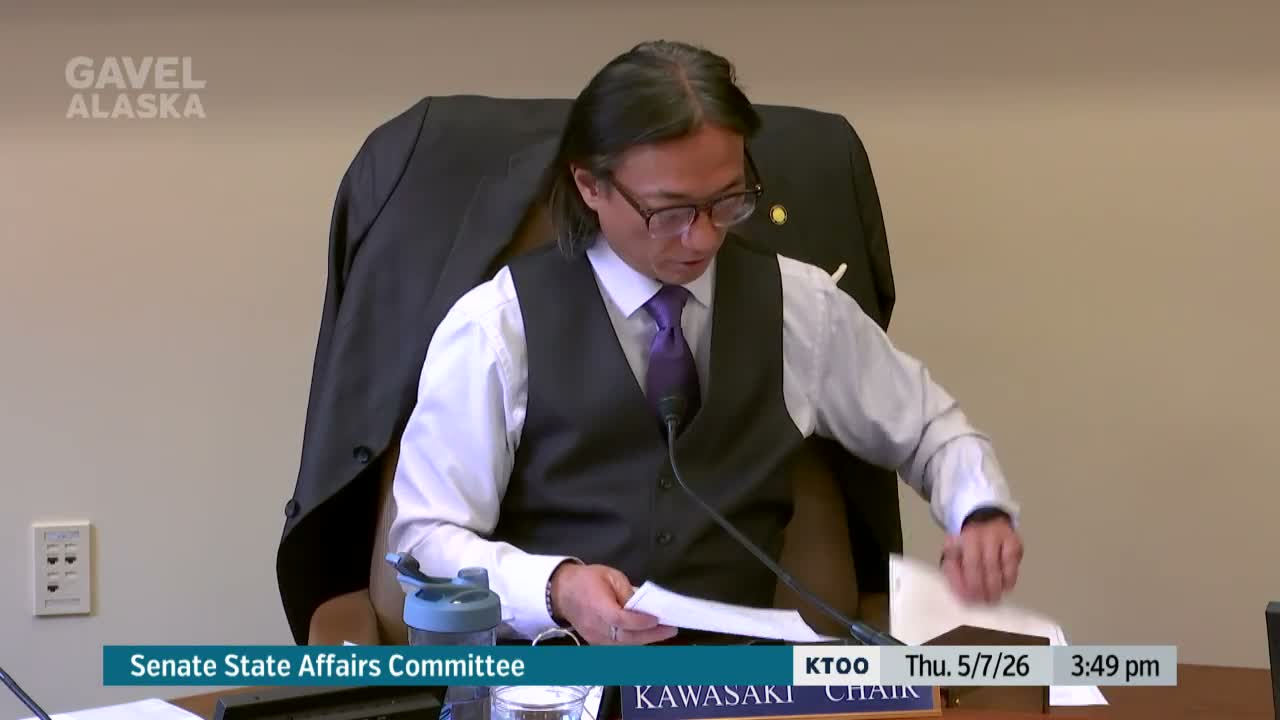
Chair Kawasaki responded to testimony by noting the Department of Transportation had historically invested roughly $17,000,000 annually in Dalton Highway maintenance and operations (the chair stated that for FY2019 about $10.5 million came from state funding and about $6 million from federal sources), and said the committee sought a clear discussion of funding options.
The committee did not take formal action on SB286 at the hearing and kept public testimony open. Chair Kawasaki said written comments may be submitted to the committee email and that staff and members would continue to evaluate federal implications and the bill's mechanics.
What happens next: Public testimony on SB286 remains open; the committee did not vote on the bill at the May 7 hearing.