Get Full Government Meeting Transcripts, Videos, & Alerts Forever!
Get email alerts on the Accessibility Design topic
No spam. Unsubscribe anytime.
Experts: Fair Housing accessibility rules apply to Buncombe County CDBG‑DR projects; designers urged to exceed minimums
Summary
At a Buncombe County workshop, accessibility experts said Fair Housing Act requirements and Section 504 apply to projects using federal CDBG‑DR funds — including some single‑family repairs — and urged designers to go beyond legal minimums for ramps, doors, mailboxes, kitchens and bathrooms.
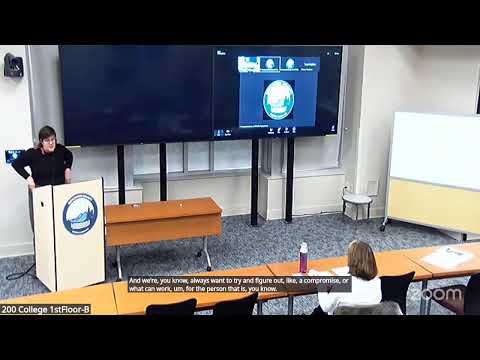
Richard Duncan, a presenter with the RL Mace Universal Design Institute, and AD Scaff of the Fair Housing Project of Legal Aid told a Buncombe County audience on May 11 that federal accessibility obligations apply to projects funded with CDBG‑DR disaster relief — and that those obligations can extend beyond multifamily construction to single‑family repair when federal funds are used.
Duncan, who led a technical review of the Fair Housing Amendments Act (FHAA) design and construction requirements, summarized the statute’s scope and the practical documents designers should consult. "The Fair Housing Act requirements apply only to new construction, not to any kind of renovation," Duncan said, while noting newly constructed additions are covered. He urged design teams to consult current building codes and HUD/DOJ guidance because the primary FHAA design manual is dated.
Legal counsel AD Scaff stressed a funding-based point the audience pressed: "If it's federally funded, then these things apply even if it is the townhome or a single family home," she said, explaining that Section 504 and FHAA obligations can attach when CDBG‑DR funds are used and that funding sources sometimes impose additional requirements.
Both presenters highlighted recurring compliance flashpoints. Duncan called out mailboxes and site amenities — "you have to have access to the swimming pool, not access into the pool," he said — and warned that mailbox placement has been the subject of HUD/DOJ guidance. On site design he cited strict slope tolerances (for example, a 2% maximum cross slope at entrances and running slopes commonly limited to about 5%) and recommended designing with tolerance margins rather than to the bare minimum to reduce risk of noncompliance during construction.
Inside units, the presenters described the FHAA as a lighter touch than the ADA or modern building codes. Duncan reviewed unit-level limits: FHAA includes some door and threshold guidance, controls and outlet mounting ranges, blocking for future grab bars, and certain kitchen and bathroom clearances, but does not require lowered counters or full knee space at appliances in most cases. On bathrooms he said outswing doors, rearranged wet walls and transfer‑style 3x3 showers can materially improve usability: "Bathrooms are the one space guaranteed you're going to have to enlarge compared to what you may be used to building," he said.
Attendees from local housing, design and aging-services organizations described real-world constraints. Legal Aid staff summarized post‑construction remedies: reasonable accommodations are policy changes (for example, assigned parking), while reasonable modifications are physical changes; for federally funded housing, the provider often bears cost responsibility for required modifications. County staff said slides and a recording will be shared with participants along with resource links.
The presenters recommended three practical steps for Buncombe County practitioners: 1) treat HUD/DOJ joint guidance and the 2017 ICC/IBC and A117.1 references as primary technical sources; 2) avoid legal minimums where feasible (give extra clearance and gentler ramp slopes to account for construction tolerance); and 3) document funding-driven obligations for each project so responsibility for modifications or accommodations is clear.
The workshop closed with offers of follow‑up assistance: presenters pointed to the Fair Housing First resources, HUD contacts, and the Fair Housing Project of Legal Aid for technical and legal questions. The county recorded the session and will distribute slides and handouts to attendees.