Get Full Government Meeting Transcripts, Videos, & Alerts Forever!
Get email alerts on the School Safety topic
No spam. Unsubscribe anytime.
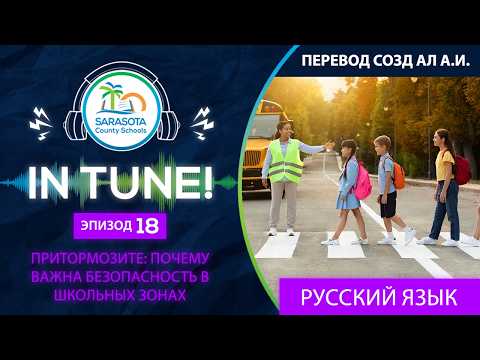
Sarasota school police deputy warns e-bikes, new drivers increase risks in school zones
Summary
Deputy Chief Dimitriy Konstantinopol told the Sarasota County Schools podcast that speeding, distracted driving and rising e-bike use — alongside newly licensed teen drivers — heighten dangers in school zones; automated speed enforcement yielded an 80% drop in violations at one school, he said.
Deputy Chief Dimitriy Konstantinopol of the Sarasota County School Police Department said rising use of electric bicycles and other motorized personal vehicles, combined with newly licensed teen drivers, is creating more hazardous conditions in school zones.
"We have thousands of children who either get driven, walk or ride to school every day," Konstantinopol said, adding that crashes that seriously injure or kill children leave lifelong trauma for families and drivers. He urged drivers to know where crosswalks and school-zone speed limits are and to exercise extra caution during arrival and dismissal times.
Konstantinopol warned that distracted driving remains a major problem in school zones and noted that Florida law prohibits using a phone while driving through a school zone, carrying enhanced penalties. He said drivers should remove distractions and "keep your eyes on the road."
The deputy highlighted visibility risks after the recent clock change that made mornings darker. He advised cyclists to use a white front light and a red rear light (ideally flashing) so motorists can see them, and he urged drivers to be particularly alert in low-light conditions.
On micromobility, Konstantinopol distinguished electric bicycles from larger electric motorcycles: "An electric bicycle is allowed on the road like a regular bike," he said, "but it cannot go faster than 28 miles an hour. If you are under 16, you need to wear a helmet." He added that electric motorcycles that can exceed 70 miles per hour are not appropriate for public roads without proper licensing and registration.
Newly licensed teen drivers complicate school-zone traffic, he said: inexperienced drivers share complex arrival and departure periods with pedestrians and e-bike riders, increasing the odds of collisions.
Konstantinopol described common unsafe drop-off and pick-up behaviors — drivers bypassing the designated queue, dropping children outside of pick-up lanes, and parking where children must cross active traffic — and tied those actions to impatience. "Just be patient," he said. "If you start the trip earlier, you reduce the pressure to rush."
He called passing a stopped school bus while its stop arm is deployed "one of the most egregious violations," saying the maneuver directly endangers children who can behave unpredictably around buses.
On enforcement, Konstantinopol recounted a school-zone automated speed program he helped implement in Sarasota. At one site, violations fell by roughly 80 percent after cameras were installed, he said, which also reduced crashes and allowed officers to be reassigned to other duties.
He closed with practical advice for families: leave earlier, model patience, ensure young riders have lights and helmets, and report unsafe conditions to the school or law enforcement so they can be addressed.
The podcast was produced by Sarasota County Schools; host Chris Parenta closed the episode by inviting listeners to report concerns and tune in to future episodes.