Get Full Government Meeting Transcripts, Videos, & Alerts Forever!
Get email alerts on the Housing And Community Development topic
No spam. Unsubscribe anytime.
Lake County holds FY26 CDBG and HOME hearing, outlines application timeline and fair-housing obligations
Summary
Lake County Planning and Community Development staff reviewed expected FY26 funding levels for CDBG and HOME, eligibility rules, updated application forms, and deadlines; staff also answered a public question about the requirement to affirmatively further fair housing.
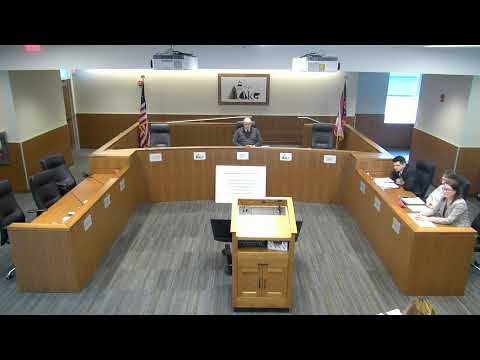
Lake County Planning and Community Development convened a public hearing on March 6, 2026, to review the U.S. Department of Housing and Urban Development (HUD) FY26 annual action plan process and to solicit public input on Community Development Block Grant (CDBG) and HOME program funding. Director David Radachy opened the meeting and said the hearing was being recorded and publicized in an advertisement and by email.
Rhea Benton, speaking for the planning department, said the county expects level funding for FY26: roughly $1.3 million for CDBG and about $450,000 for HOME, although final HUD allocations have not been announced. Benton summarized who may apply for CDBG (units of local government, nonprofit organizations, community development corporations, public housing authorities and institutions of higher education) and listed eligible CDBG activities including public improvements, economic development, public services, housing activities, acquisition/disposition and planning.
Benton and other staff emphasized program requirements: CDBG-funded projects must meet a HUD national objective (benefit to low- and moderate-income persons, elimination of blight, or urgent need); CDBG is a reimbursement program (recipients are paid after expenses are incurred); construction projects must incorporate Davis-Bacon federal prevailing wage in cost estimates; and projects are subject to federal procurement and environmental-review requirements. Benton also pointed attendees to the county website for application materials and additional guidance.
Emily Moran described the HOME program’s purpose to expand affordable housing for low-income households and listed eligible HOME activities such as acquisition, new construction, tenant-based rental assistance, homeowner rehabilitation and CHODO operating and capacity-building. Moran said a minimum of 15% of HOME funds is reserved for CHODO activities and up to 10% may be used for planning and administrative costs. HOME carries a one-to-four match requirement (recipients must provide at least 25% of HOME funds drawn for project costs), with certain administrative and CHODO funds exempt from match.
Christian (listed in the record as Christian Break/Blake) said application forms and supporting resources — including block-group maps, the consolidated plan and an application-review rubric — would be posted to the county website by the end of the day. He announced a mandatory consultation requirement for applicants that did not carry out projects in FY24 or FY25; those consultations are scheduled for the week of April 6–10, 2026.
Key deadlines and submission instructions: applications are due by 4:00 p.m. on May 8, 2026, and the county requires a physical copy plus a digital copy on a flash drive (delivery in person, via the office drop box, or by mail are acceptable). Staff said preliminary awards were tentatively planned for June, a second public hearing is expected in July, award letters will be mailed in September, and the FY26 grant year will begin October 1, 2026; projects generally begin after subrecipient agreements are fully executed (often in December or January).
During the public-comment portion, Karen McLoud of Extended Housing asked staff to "explain further about what affirmatively furthering fair housing means," and whether municipalities that create obstacles to development could be considered noncompliant. Benton replied that both the CDBG and HOME application forms include dedicated checklists describing actions applicants can take to affirmatively further fair housing, that the county’s citizen participation plan (a commissioner-adopted policy) provides additional detail, and that implementation challenges would be reviewed on a case-by-case basis.
For written comments and questions, staff provided contact information for David Radachy, Director, Lake County Planning and Community Development (105 Main Street, Suite B401, Painesville, OH 44077) and the email david.radachy@lakecountyohio.gov. The hearing closed after staff confirmed there was no further business. The county encouraged prospective applicants to review posted materials and to schedule consultation meetings as needed.
The record contains no formal motions or votes; the meeting served to inform prospective applicants about program rules, deadlines and outreach opportunities.