Get Full Government Meeting Transcripts, Videos, & Alerts Forever!
Get email alerts on the Environmental Health topic
No spam. Unsubscribe anytime.
Residents press borough over 630 Central Avenue; borough says state records show no documented contamination
Summary
At a New Providence Borough Council meeting residents pressed officials about alleged contamination tied to a planned demolition at 630 Central Avenue. Borough staff and records review told the council there is no documented soil, groundwater, or vapor-intrusion contamination at that address and said the borough lacks authority to require sampling without regulatory triggers.
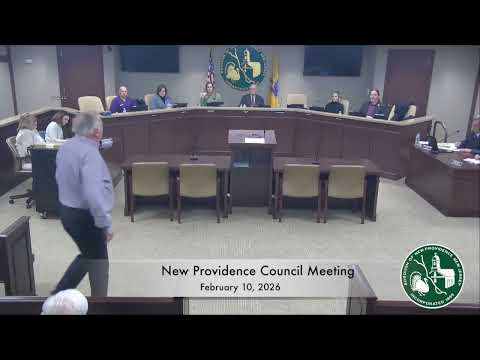
A public debate over environmental risk and municipal authority unfolded at the New Providence Borough Council meeting on Feb. 10 after officials read a statement addressing social-media claims about 630 Central Avenue.
The statement, read by a borough representative, said a records review of material maintained by the New Jersey Department of Environmental Protection and borough files found no documented evidence of soil contamination, groundwater contamination, or vapor intrusion associated with the 630 Central Avenue property. The statement noted a separate nearby industrial site north of Central Avenue is the subject of an ongoing groundwater-remediation plume, but that available data do not indicate the plume is migrating to 630 Central Avenue.
Resident Phil Dempsey, who said he has lived in New Providence for more than 40 years, told the council he and neighbors had received certified letters placing properties within a mapped area and recounted historical spills and testing in the vicinity. He said the history included etching operations related to chip manufacturing that, in his account, impacted groundwater and that properties in the area have changed hands multiple times. He urged the borough to have its attorney send certified notice to the current owner of 630 Central Avenue to ensure the owner is aware of the prior issues before soil-disturbing work begins.
Council and staff members responded by distinguishing the sites: officials stated the classification exception area and the groundwater plume referenced in public discussion are tied to a different site on the north side of Central Avenue (the Spring Street area) and that 630 Central Avenue itself is not listed in NJDEP environmental databases as the source of contamination. Borough staff said demolition permits are administered locally and, absent documented contamination or regulatory triggers, the borough and NJDEP do not have legal authority to require environmental sampling or remediation as a condition of a demolition permit. They added that building permits may trigger different review and that the borough is coordinating with the county board of health and state agencies where appropriate.
Mr. Dempsey asked whether prior certified notices remain attached to property records and whether sale transactions would pass that information to new owners; a council member and a resident with real-estate experience said the notice typically appears in seller-disclosure materials and can be discovered during due diligence. Borough staff confirmed some wells at other nearby properties were decommissioned after abatement and said those results were provided to the borough.
The borough statement and council discussion stressed reliance on professional regulators and on NJDEP and Department of Health determinations, and invited residents to submit credible, verifiable information for further review. Council members said they would consider whether the town should send factual information to the property owner by certified mail so the owner is aware of historical records the borough holds, but emphasized the difference between a history of local industrial activity and an identified regulatory determination of contamination at the specific parcel.
The council closed the public-hearing portion after additional comments about parking, sidewalks, and Safe Routes to School funding were raised by residents.
Next steps: the borough said it would continue to cooperate with NJDEP and the Department of Health if new, verifiable information is submitted and that building-permit reviews could be expected to include any required environmental testing under existing regulatory frameworks.