Get Full Government Meeting Transcripts, Videos, & Alerts Forever!
Get email alerts on the Constructive Possession topic
No spam. Unsubscribe anytime.
Defense says constructive‑possession instruction risked wrongful conviction in firearms appeal
Summary
In Commonwealth v. Deersus, defense counsel told the Appeals Court that a jury instruction allowing conviction "through another" was confusing and could permit conviction based on otherwise lawful conduct by a co‑defendant; the Commonwealth argued the jury’s verdicts showed no prejudice.
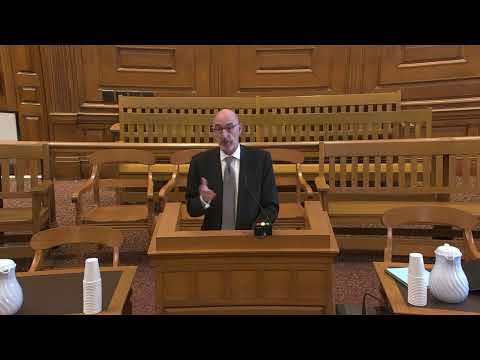
May it please the court. The defense told the three‑judge panel that an instruction on "constructive possession" that used a "through another" formulation risked sending jurors down a legally confusing pathway.
Defense counsel argued the phrasing could allow jurors to convict the defendant even if the co‑defendant lawfully possessed the weapon at relevant times. Counsel illustrated the problem with hypotheticals — for example, where a licensed holder temporarily held a firearm for an unlicensed friend — and urged that without clearer instructions or a specific verdict slip discerning who possessed the gun, the ambiguity could be prejudicial.
Assistant District Attorney Matthew Palano replied that the record shows the jury found the defendant guilty and that the Commonwealth proved a lack of license, which under established precedent distinguishes principal liability from joint‑venture theories of liability. He contended that even if the instruction was imperfect, any error would be harmless on this record.
Why it matters: appellate guidance on how courts should frame constructive‑possession and joint‑venture language affects how trial judges instruct juries in similar cases. The panel asked detailed hypotheticals probing whether the instruction relieved the Commonwealth of its burden or instead simply tracked established model language.
What happens next: The court took the arguments under advisement and will issue a written decision resolving whether the instruction, as applied, was erroneous or harmless on the existing record.