Get Full Government Meeting Transcripts, Videos, & Alerts Forever!
Get email alerts on the Appeals Court Roundup topic
No spam. Unsubscribe anytime.
Massachusetts Appeals Court hears six appeals on jury instructions, GPS evidence, zoning and conservatorship
Summary
On March 13, 2026, a three-judge panel of the Massachusetts Appeals Court heard oral arguments in six appeals, including disputes over constructive-possession jury instructions in a firearm case, GPS-data admissibility in a sexual‑assault conviction, an abutter's standing in a Dennis zoning decision, conservatorship limits on making a will, and a tax-exemption dispute over who qualifies as the 'taxpayer.'
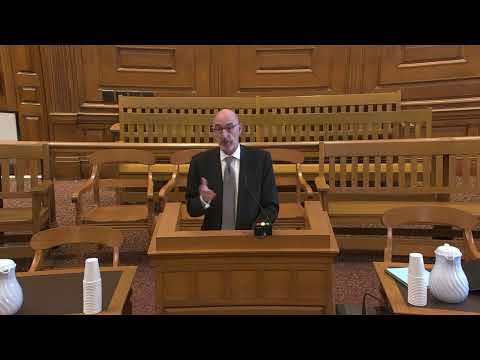
The Massachusetts Appeals Court convened in Boston on March 13, 2026, and heard arguments in six appeals spanning criminal and civil law.
A three-judge panel presided over two criminal appeals that tested jury instructions and evidence handling. In Commonwealth v. Deersus, defense counsel argued that an instruction on constructive possession — phrased as possession "through another" — created a confusing pathway by which jurors could convict the appellant despite ambiguity over which person actually possessed the firearm. Counsel told the court he feared the instruction let jurors convict the defendant "through another" where the co‑defendant might lawfully possess the gun. Assistant District Attorney Matthew Palano said the record and the jury’s verdicts show the Commonwealth proved the defendant lacked a license and that any instructional issue was harmless on this record.
In a separate criminal appeal, appellant counsel pressed arguments that a recorded statement by an alleged shooter and shifting testimony by a key witness (Jacob Blanchard) undermined the conviction of Kevin Neves. Counsel quoted a recording — "Nobody knows it's me" — as evidence the shooter disclaimed that a codefendant knew he had a gun; the Commonwealth countered that the record supports joint‑venture instructions and that the jury’s verdicts align with the evidence presented at trial.
In Commonwealth v. Castro, the court considered challenges to GPS‑bracelet data. Appellant counsel argued sizable margins of error in many GPS points made the data unreliable and unduly prejudicial; trial counsel had also emphasized the defendant’s home‑confinement status, which the appellant argued the Commonwealth used to infer motive. The Commonwealth urged precedent treating properly authenticated GPS data as admissible and said the confinement information was probative of identification and opportunity.
The panel also heard two civil appeals. Janice Costa challenged the Planning Board of Dennis, asserting the board adopted generalized staff findings without a reasoned analysis of congestion and safety where a proposed 24‑unit development would concentrate roughly 271 vehicle trips daily near her home. The board and the developer’s counsel countered that trial testimony, including a traffic expert, showed only a de minimis effect and that the board appropriately considered the bylaw criteria.
In a probate matter, counsel for the Kosma estate debated whether a conservatorship order transferred the exclusive authority to authorize testamentary acts to the court. Appellants said the conservatorship statute (as amended under the MUPC) reserves the power to make or delegate testamentary authority to the court; respondents urged that conservatorship should not automatically suspend a protected person’s testamentary capacity without a focused hearing and express findings.
Finally, the court addressed a property‑tax exemption dispute in which the assessors argued precedent requires the exemption applicant be the person legally liable for the tax. The dispute highlighted procedural questions about who may file an exemption application when a condominium unit is held by an LLC.
The panel asked extensive questions of counsel in each matter and took the cases under advisement before recessing. The court’s eventual written rulings will clarify several contested points of Massachusetts law on jury instructions, forensic evidence, administrative standing, and conservatorship scope.