Get Full Government Meeting Transcripts, Videos, & Alerts Forever!
Get email alerts on the Parking Policy topic
No spam. Unsubscribe anytime.
Bangor parking committee weighs paid street parking, garage upgrades and enforcement
Summary
The Downtown Bangor Parking Committee reviewed public feedback from a recent outreach event and discussed signage, turnover, safety, employee parking discounts, enforcement and paid on‑street options as part of a broader effort to boost garage use and turnover downtown.
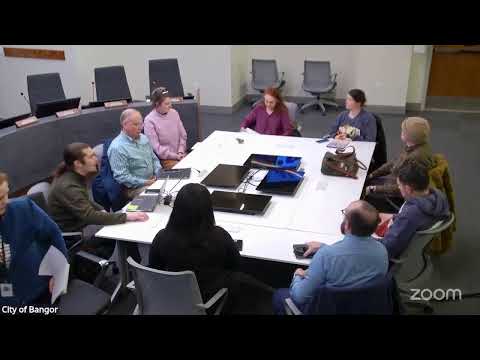
At a meeting on May 11, the Downtown Bangor Parking Committee discussed results from a recent public outreach event and explored a range of measures to improve downtown parking use and turnover, including clearer signage, targeted lighting, enforcement changes, pricing adjustments and a potential paid on-street program.
Committee Chair Joseph Leonard opened the discussion by summarizing public feedback gathered at the outreach event and asking members to identify actionable items to bring back to staff. Planning analyst Matt Aliro and other staff presented the outreach summary: attendees most commonly cited confusion about wayfinding, inconsistent time limits on curbside spaces and lack of awareness of off-street garages as reasons they avoid the deck during some visits.
Members focused first on signage and navigation. Several committee members described drivers getting trapped at the first garage entrance and then finding permitted signs on upper levels that make the deck appear unavailable. Staff and private-sector members recommended better directional signs approaching the garage and clearer internal wayfinding so visitors know which level to use and where transient parking is allowed.
The committee also spent substantial time on turnover versus supply. Staff noted that turnover data presented at a prior meeting show rates within typical ranges, and multiple members characterized the problem as perception-driven — people see a few cars and assume parking is unavailable. The committee discussed prioritizing prime curbside spots for short-term users (60–90 minutes), and agreed communications and directional tools (maps, signage, app information) could shift some demand to off‑street, lower‑cost lots.
Safety and lighting were cited repeatedly as barriers to garage use, particularly for women and older visitors. Members suggested decorative but functional lighting, selective CCTV signage and other low-cost measures to improve perceived safety and encourage use of the garage at night.
The committee also revisited discounted off-street permits for employees and residents. Staff said several lots already offer reduced monthly rates (examples cited during the meeting included rooftop and Core Street lots discounted to roughly $35/month in past programs) and reported available capacity: "we've got 53 spaces open on the roof" was cited during discussion. Members noted that convenience and weather (roof access, elevator rides, snow conditions) reduce uptake for some workers, particularly late-night service staff.
Finance and enforcement implications framed much of the discussion. Staff reiterated that parking is run as an enterprise fund: revenue must cover operations and capital needs. Members heard a staff estimate that repairs to the city deck can run in the neighborhood of $250,000 per year. Ticket revenue was confirmed to flow back into the parking fund, complicating proposals to offer broad discounts without offsetting revenue or enforcement changes. Committee members asked staff to model options such as modest ticket fee increases, targeted discounts for day-shift employees and the net revenue impact of a paid on‑street program.
Planning staff also recommended exploring a mobile pay app as a near-term pilot: an app could allow users to find available lots, extend a session remotely and increase awareness of off-street options. The committee asked staff to return with cost estimates, vendor considerations, and the revenue/turnover trade-offs of paid curbside parking vs. lower off-street permit rates.
On accessibility, members asked staff to reassess the distribution of ADA spots downtown after public comment that some designated stalls are underused while nearby businesses and the theater need closer accessible stalls. Staff said an ADA transition plan under development could incorporate that review.
The committee agreed to continue the topic at a future meeting and requested staff provide: documentation of the public input, counts of existing permit and transient spaces, occupancy and ticketing data, estimated revenue impacts for several pricing scenarios, and a feasibility memo on paid on-street options and a mobile payment pilot. The group also discussed timing: staff indicated a comprehensive analysis would take a few months, but members asked that interim findings and targeted studies (ticket/pricing and enforcement impacts) be returned sooner.
The meeting ended with general agreement to prioritize signage, safety lighting, and an analysis of paid street pricing versus targeted off‑street discounts as near-term next steps. The committee will revisit the items once staff provides the requested data and cost estimates.