Get Full Government Meeting Transcripts, Videos, & Alerts Forever!
Get email alerts on the Workplace Conditions Elop topic
No spam. Unsubscribe anytime.
After‑school program facilitators and classified staff tell Stockton Unified board they are overworked and under‑supported
Summary
Dozens of classified staff and after‑school program facilitators told the Stockton Unified School District board they face heavy workloads, inconsistent supervision, and targeted inspections they call punitive, and urged the board to investigate staffing, communication and workplace practices.
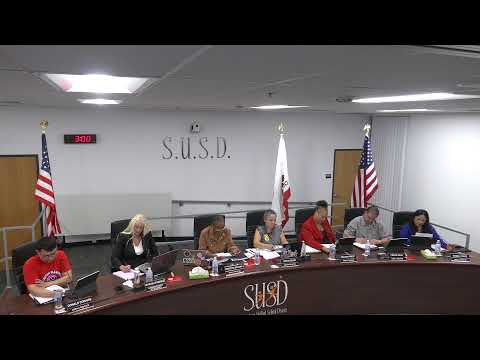
Dozens of classified staff and after‑school program facilitators told the Stockton Unified School District board on Tuesday that rapid program growth, last‑minute changes and uneven supervision have left many employees exhausted, fearful of discipline and unable to serve students at the level they expect.
At the start of the public‑comment portion of the meeting, Terry Welch, a teacher at Jane Frederick Continuation High School, asked the district to consider cash donations to the San Joaquin Emergency Food Bank to help families who could lose SNAP benefits; she said food insecurity is already a pressing local need and urged the district to publicize donation opportunities.
Several subsequent speakers focused on workplace treatment and program operations. Bernardet Armenta, addressing the board on behalf of custodial staff, said her members have experienced repeated "white glove" inspections that they view as targeted efforts to find violations and discipline employees. "My members report these white glove inspections are happening repeatedly at our sites and our members are feeling like this is part of a targeted effort to get them in trouble," Armenta said.
Kitchen staff raised related concerns about workload and safety. Karen Aik, speaking as a lead at Roosevelt Elementary, said deliveries and the new family‑style meal service have created material and labor demands that sites cannot meet with current staffing: "We are being overrun with the new family style ... the dishes alone ... are adding at least an hour to two hours of extra workload. We need more help. We need more hours."
Multiple speakers who identified themselves as program facilitators for the district's Expanded Learning Opportunities Program (ELOP) said the department has added higher‑level management positions without providing the promised ground‑level support. Maria Zamora said the department had "gone from quality programs to quantity numbers," adding that facilitators now supervise more staff and students without commensurate compensation or decision‑making authority. Katie McDonovan, a program facilitator and California School Employees Association representative, described inconsistent expectations, unclear task delegation and what she called "inconsistent and dismissive communication" from management that led to low morale.
Louise Baros and others recounted supervisors sending conference‑style reprimands that they said blamed employees for absenteeism and morale problems. "Sick time is allowed to them under the law," Baros said, reading an example of a conference summary her members had received. "That is a very disrespectful way to talk to somebody."
Victor Garcia, an ELOP staffer, said the district needs stronger leadership accountability. "The biggest obstacle we face is people's ability to hold themselves accountable and accept responsibility when they make mistakes," he said, naming several district staff he praised for steady leadership while asking the board to act on patterns he described.
Board members thanked the speakers and acknowledged the concerns; the meeting record shows no immediate policy action or staff response beyond oral recognition. The board proceeded to its consent agenda and later to presentations on credentialing and special‑education monitoring.
What happens next: Commenters asked the board for site visits, investigations and better staffing decisions. The board did not vote on new ELOP policies during this meeting; trustees and district staff will have opportunities to respond in future meetings or through follow‑up with the superintendent's office.
Sources: Public comment period, Stockton Unified Board of Trustees meeting, oral remarks by named speakers and request cards submitted at the meeting.