Get Full Government Meeting Transcripts, Videos, & Alerts Forever!
Get email alerts on the Board Policy 6144 topic
No spam. Unsubscribe anytime.
Pajaro Valley trustees pull 'controversial issues' policy for rewrite after public outcry
Summary
After intense public comment and questions about process, the Pajaro Valley Unified School District board voted to remove a revised BP 6144 from the consent calendar and return it for broader drafting with teachers, students and community members.
Pajaro Valley Unified trustees on Tuesday moved a proposed update to board policy 6144 — titled “controversial issues” — off the consent calendar and into discussion after hours of public testimony accusing the draft of imposing censorship and granting excessive discretion to the superintendent.
Assistant Superintendent Claudia Monjadas presented a redlined draft of BP 6144, describing edits that align language with neighboring districts. Multiple speakers told the board the draft as released had caused harm, saying it could allow administrators to block classroom content and would chill teaching on topics ranging from pesticides to LGBTQ+ inclusion. “This policy feels like censorship,” said public commenter Bobby Pells, urging trustees to delay consideration and rewrite the policy in partnership with teachers and students.
Trustees acknowledged the strength of community reaction and mistakes in how the policy was posted; President Olivia Flores and several trustees apologized for placing the item on the consent agenda. Trustee Shirley proposed a working group of trustees, two teachers and students to help draft a new version; several trustees agreed that future policy updates should follow a first-read/second-read process and deeper community engagement. Monjadas clarified on the record that the phrase “superintendent or designee” is standard policy drafting and that, in practice, site principals or designees typically handle classroom-level decisions.
Board members stressed that they did not intend to curtail classroom discussion but said the public response showed the policy needs clearer guardrails. Trustee Flynn said the district will re-open drafting with teacher and student representatives and bring revised language back for review. The board made no vote on final policy language; it moved BP 6144 back into a discussion status to permit a re-drafting process involving the community.
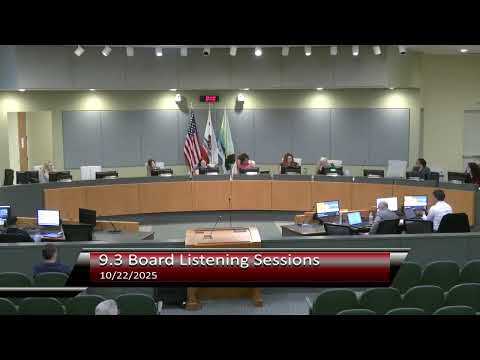
What’s next: Trustees pledged to form a small drafting group and to use the public listening sessions scheduled this fall to gather broader feedback before any final vote. The board said future policy work will follow formal first- and second-reading steps to allow sufficient community review.