Get Full Government Meeting Transcripts, Videos, & Alerts Forever!
Get email alerts on the School Closures topic
No spam. Unsubscribe anytime.
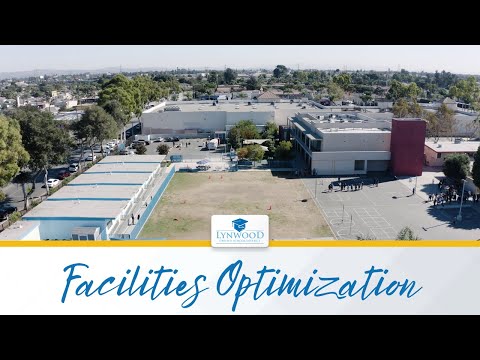
Lynwood Unified advisory committee recommends three elementary schools for closure and a middle‑school campus move
Summary
At its final advisory meeting, a Lynwood Unified committee recommended the board consider closing Lugo, Wilson and Rosa Parks elementary schools and relocating Hosler Middle School to the former high‑school campus, citing long‑term enrollment decline, excess elementary capacity and about $250 million in districtwide repair needs.
The Lynwood Unified School District advisory committee voted by consensus to recommend that the board consider closing three elementary campuses — Lugo, Wilson and Rosa Parks — and relocating Hosler Middle School to the vacated high‑school campus once the new high school opens.
"This work isn't about closing schools, okay? It's about sustainability," said Patrick, the committee's meeting leader, opening the group's final session and laying out the timeline for the board to review recommendations in November with expected decisions in December. Joe, the meeting presenter, told the committee the district and much of Los Angeles County are seeing long‑term enrollment declines, and the committee's task was to weigh where to focus resources so students have safer, better‑supported campuses.
Why it matters: presenters said the district was built for more than 16,000 students but now serves far fewer; for elementary buildings specifically, the packet showed roughly 5,300 enrolled students and more than 4,100 seats of excess elementary capacity. The committee also heard that the district's 2024 facilities master plan documents roughly $250 million in identified repair and modernization needs across sites, which staff translated as an average of roughly $10–15 million per campus.
The committee reviewed demographer projections (based on birth rates and cohort‑survival methods) for individual campuses and neighborhood scatter‑plot maps showing where enrolled families live relative to schools. Parents pressed presenters on what the year‑by‑year numbers mean. "These are projections, right?" one parent asked; presenters explained the charts use October enrollment benchmarks and projections that can show small annual numeric declines that accumulate over time.
Committee members also reviewed walking‑distance and capacity scenarios for receiving schools. Presenters pointed to nearby schools with capacity — including Lindberg and Mark Twain — and said some unused rooms would need modernization before accepting additional students. When asked whether excess capacity counts portables, staff said the facilities master plan figure is based on current classroom inventories and that many portables and rooms need investment before being used.
Process and consensus: the committee split into three small groups (each including at least one parent, a school administrator and an employee representative) and reported back. Two groups prioritized Lugo, Wilson and Rosa Parks; one group prioritized Lugo, Lincoln and Rosa Parks. After discussing proximity, repair costs and distribution of receiving students, facilitators concluded that the Wilson recommendation could meet the group's consensus threshold if one group could "live with" that outcome. The facilitator repeated that committee recommendations are advisory and the elected board has the final decision.
Emotional impact and communications: multiple speakers urged care in how recommendations are conveyed to families. A teacher who said their site would be affected told the committee it had been "emotional for the students, the staff, and the parents," and urged the committee to emphasize that proposed consolidations are intended to reinvest resources into remaining campuses, reduce combination classes and sustain programs.
Next steps: the committee will present its recommendations and the supporting data at the next board meeting; the presenters reminded members that the board will analyze the data, visit sites and hear public comment before taking action. The committee packet and the 2024 facilities master plan (which lists site‑level needs and the $250 million estimate) are available on the district's facilities web page, staff said.
What was not decided: the committee did not take a formal board vote (its role is advisory), and specific timelines for closures, student reassignment plans, and transportation details remain to be developed and presented to the board for approval.