Get Full Government Meeting Transcripts, Videos, & Alerts Forever!
Get email alerts on the Ethnic Studies topic
No spam. Unsubscribe anytime.
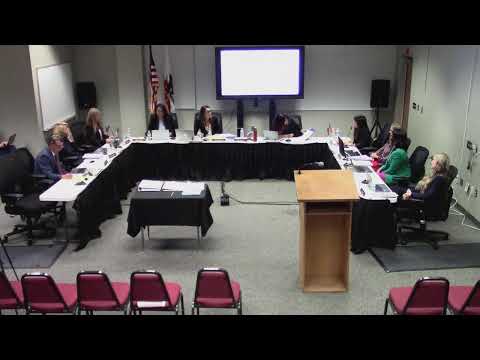
Board approves year-long ethnic studies elective after hours of public comment
Summary
The Carlsbad Unified School District board approved a year-long ethnic studies elective aligned to the California model curriculum to run at Sage Creek High School. The decision followed an extensive public comment period and a divided board debate about curriculum framing, definitions such as CRT, and instructional materials transparency.
The Carlsbad Unified School District Board of Trustees voted to adopt a year-long ethnic studies elective on June 18, approving Exhibit A — the course outline staff developed in alignment with the California Ethnic Studies Model Curriculum.
The course was presented to trustees by Dr. Brockett, director of secondary curriculum and instruction, who said staff revised the outline after board direction and advisory‑committee feedback to emphasize stories of communities overcoming racism and to align terminology with the state model. "We updated unit summaries and sample resources to highlight stories of success and resilience," he told trustees.
Why it mattered: Supporters — parents, students and teachers — said the elective will develop historical literacy, critical thinking and empathy. Jennifer Zamora, a parent and participant in the advisory process, told the board, "Ethnic studies isn't about blame. It's about context." Several students and educators described academic benefits and urged the board to approve the elective at Sage Creek, where staff reported sufficient student interest.
Opponents raised concerns that the course could frame history primarily as oppressor vs. oppressed or blur lines with activism. Several speakers asked for clearer definitions of critical race theory and "liberated ethnic studies," and pressed for advance access to supplemental instructional materials. One commenter asked why a unit titled "Access and Activism" would include a mock town hall, arguing it amounted to promoting activism; staff responded that the unit is intended to teach civic engagement tools and critique movements, not to send students into the community as organizers.
Trustee discussion focused on alignment with state guidance, local control and readiness. Trustees asked staff whether the district is required to offer ethnic studies, how the state funding trigger affects timing, and whether the district had dedicated development funds. Dr. Brockett said the district used just under $100,000 in state grant funds for course development and that offering a single elective section poses no new recurring cost to the master schedule beyond normal site allocations.
Vote and next steps: After board deliberation the motion to approve the course passed 3–2 (Emory, Ward, Rawlings — yes; Ciosce, Verbeth — no). Dr. Brockett said staff will finalize materials and notify the site and community; the district posted responses to public questions and will continue site-level alignment of course descriptions and catalog entries.
What remains unsettled: Several trustees and audience members asked for clearer public access to the full set of instructional resources, and one trustee said the district should continue to refine the elective as an optional offering before any statewide requirement becomes mandatory. The board's action was limited to adopting the Exhibit A course outline as an elective for the 2025–26 academic year.