Get Full Government Meeting Transcripts, Videos, & Alerts Forever!
Get email alerts on the Land Use topic
No spam. Unsubscribe anytime.
Board approves Echelon MAJ 2534 after split, rejecting magistrate objections fails
Summary
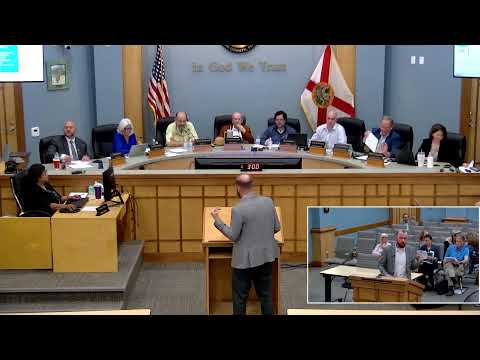
After a lengthy review of vested‑rights arguments and magistrate findings, Walton County commissioners approved the ALJ’s recommended final development order for project MAJ 2534 (Echelon) on a 3–2 vote; commissioners who opposed the approval cited concerns about scale, traffic and neighborhood compatibility.
Walton County commissioners accepted an administrative law judge’s recommended final order for project MAJ 2534, commonly referred to in the meeting as “Echelon,” after a divided meeting over vesting and neighborhood impacts.
Commissioner Curry moved to reject the special magistrate’s order — citing (and adopting) objections documented in the agenda packet alleging legal and factual errors in the magistrate’s conclusions. That motion failed after discussion by staff, planning and the county attorney about vested rights and the limited scope available to the board under governing statutes. Planning staff and the county’s legal advisor explained that some development rights had been historically vested and that overturning a magistrate’s findings carries legal risk and would likely generate appeals.
A later motion to approve the ALJ‑recommended order succeeded 3–2, with Commissioners Johns and Curry recorded in the dissent. The board clerk recorded that the action was acceptance of the ALJ’s recommended order and approval of the final development order for project MAJ 2534.
During the debate commissioners and neighbors raised concerns about the project’s height, mass, density and traffic impacts adjacent to long‑standing single‑family neighborhoods. Planning staff and the county attorney reiterated that vested‑rights questions are governed by statute and that denial without specific, record‑based findings increases the county’s exposure to litigation. Commissioners acknowledged that either approval or denial could prompt appellate litigation.
The board recorded the roll call and published the vote; staff will follow up with the administrative-record filings and the formal development order recording steps. The county attorney advised that courts typically resolve disputed vesting claims in an appeal, and the board’s written motion and findings were entered into the record to support the county’s legal posture.