Get Full Government Meeting Transcripts, Videos, & Alerts Forever!
Get email alerts on the Data Centers topic
No spam. Unsubscribe anytime.
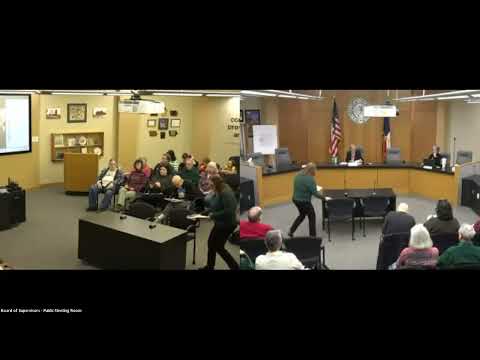
Story County adopts one‑year moratorium on data centers and approves wind, solar and battery rules
Summary
The Story County Board of Supervisors on March 17 approved Ordinance No. 330 revising wind and solar rules and adopted Resolution 2669, a temporary moratorium through March 31, 2027, on data centers and cryptocurrency operations in unincorporated areas to allow staff time to draft regulations.
The Story County Board of Supervisors voted March 17 to adopt Ordinance No. 330, updating county regulations for wind and solar projects and adding battery energy storage systems as a conditional use, and to approve Resolution 2669 establishing a temporary moratorium on digital asset mining, cryptocurrency operations and data processing centers in unincorporated Story County through March 31, 2027.
Leanne Harter, Planning and Development Director, said the ordinance had already been considered twice and that the board had directed staff to remove references to data centers earlier in the process. "This is third consideration of Ordinance number 330," Harter said, adding the ordinance would be published next Thursday if approved and become effective on publication. She described the substantive changes as amendments to wind and solar regulations and the addition of standards for battery energy storage systems.
On the separate moratorium, Harter told the board the resolution would "extend the temporary moratorium that was established by the board last summer" and give staff and the county attorney time to develop regulations specific to digital asset mining, cryptocurrency operations and data processing centers located outside city limits.
During public comment, residents and activists urged the board to extend the moratorium and several urged a permanent ban. "I am in favor of the resolution to extend the moratorium for up to one year in order to allow adequate time for staff to craft a set of prudent, protective, and responsible regulations that safeguard our limited natural resources," said Mike Mets, a resident who addressed the board. Susie Petra, who identified herself as affiliated with Data Center Watch, summarized national trends: "Twenty new blocked or delayed projects...188 grassroots opposition groups have been organized and 66% of the identified proposed projects were stalled or blocked," she said.
Speakers raised concerns about cumulative water use, power demand, noise and air pollution from backup generators. "Water is our most precious resource," said Dean Baker during public comment, urging the county to consider a permanent ban. Brenda Brink pointed to air‑quality concerns tied to backup diesel or gas turbines and cited reports of increased nitrogen‑oxide emissions near large sites.
Following comment, a supervisor moved and seconded approval of Resolution 2669; the board adopted the moratorium and the ordinance on third consideration. The resolution sets a March 31, 2027, end date for the temporary prohibition and directs staff to pursue rulemaking through the Planning and Zoning Commission and the Board of Supervisors.
Next steps: staff will draft the regulation package for data centers and related uses and return to the planning commission and the board for review. The moratorium gives staff time to complete that process and to coordinate with county counsel.