Get Full Government Meeting Transcripts, Videos, & Alerts Forever!
Get email alerts on the Sports Policy topic
No spam. Unsubscribe anytime.
Backers unveil 'Home Team Act' to give communities first chance to buy sports teams
Summary
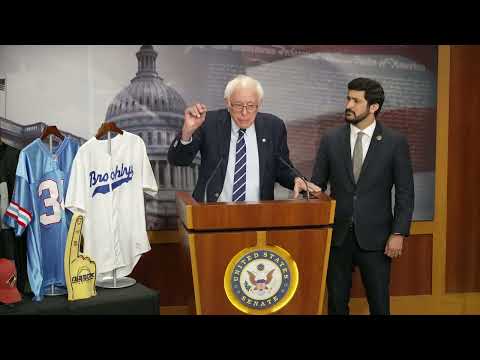
Sponsors presented the Home Team Act at a public event, saying it would require owners to announce relocations one year in advance and give local communities a right of first refusal to buy teams at fair market value, citing Packers-style models and examples like the Dodgers and SuperSonics.
Backers of the Home Team Act said at a public event that the bill would require team owners to announce a planned relocation at least one year in advance and give the local community a right of first refusal to purchase the team at fair market value.
Greg, the House sponsor of the proposal, said the change would give fans and taxpayers a meaningful chance to keep clubs in their cities rather than being forced into expensive bidding wars. "One year before an owner can ever relocate a team, they must announce it. Then the community has a chance to buy that team at its fair market value, including through the kind of community ownership model that has kept the Green Bay Packers in NFL's smallest market for over 100 years," Greg said.
Senator Bernie Sanders, who participated in the event, framed the bill as both emotional and civic. "Sports is what America is largely about," he said, adding that losing a team can leave a lasting community wound beyond job losses. Sanders and the sponsor cited historical relocations — the Brooklyn Dodgers, the Seattle SuperSonics and the Houston Oilers — as examples the bill would have addressed.
The proposal would not ban cities or states from making deals with teams, speakers said; instead, it would prevent owners from leveraging the threat of relocation to extract outsized public subsidies. "We just want basically a level playing field for fans and taxpayers rather than the current system that gives all of the benefit to the owners," the senator said, citing recent negotiations in Illinois and competing offers from Indiana as an example of interstate subsidy competition.
Speakers described the mechanics as a right-of-first-refusal: if a local buyer or partnership steps forward and meets the fair market price, the owner would need to sell to them rather than moving the team immediately. If no purchaser emerges, the owner may proceed with relocation after the notice period. The bill’s sponsors pointed to the Green Bay Packers and certain German fan-ownership soccer models as existing templates for community stake arrangements.
Reporters pressed sponsors on specifics. A Chicago Tribune reporter asked why crossing a state line should matter; the sponsors said interstate moves create leverage that pits one jurisdiction’s taxpayers against another and that the bill aims to neutralize that advantage. Gabriel of The American Prospect asked how cash-strapped cities or nonprofits could afford multimillion-dollar teams; sponsors responded that municipalities already provide large subsidies without ownership stakes and that the bill would allow a range of buyers, including nonprofits, public–private partnerships and wealthy local investors.
Sponsors also highlighted examples in which alternative structures delivered community benefits: Austin FC’s arrangement and the Columbus Crew’s local purchase were offered as evidence that cities could secure community benefits, discounted or free tickets for residents, and municipal lease payments without surrendering long-term control or receiving no share of profits.
Supporters repeatedly framed the bill as preserving community ties and preventing what they described as extortionate public giveaways to already-wealthy owners. They did not announce a legislative timetable or a planned floor vote at the event.
What’s next: organizers urged communities and local nonprofits to study financing options, and said the bill would proceed through the legislative process; no formal vote was taken at the event.