Get Full Government Meeting Transcripts, Videos, & Alerts Forever!
Get email alerts on the Zoning 5 Acre Minimum topic
No spam. Unsubscribe anytime.
Coffee County Planning Commission chair: five-acre minimum applies only to A1 zoning, not a moratorium
Summary
At a March 24 meeting, the Coffee County Planning Commission chair clarified that the five-acre minimum applies only within the A1 zoning district and that there is no moratorium; commissioners approved the agenda and minutes, deferred two plats to April, and noted a Tennessee Department of Environmental Conservation hearing on farm ponds and quarries.
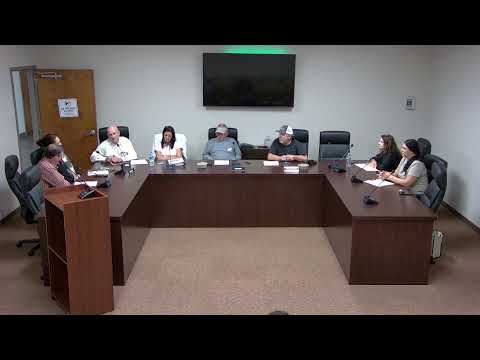
The Coffee County Planning Commission on March 24 clarified that the county’s five‑acre minimum applies only to the A1 zoning district and that “there is no moratorum,” the commission chair said, addressing confusion circulating on social media.
The chair opened the meeting at 4 p.m., invited public comment (none were offered), and led the commission in approval of the meeting agenda and the minutes from the previous meeting. Two plats — a major preliminary for MC England Road and a minor final plat for Fountain Grove Road — were deferred to the commission’s April meeting after required signatures were not completed.
The chair spent the bulk of the meeting explaining how the five‑acre rule works and where it applies. “There is a five‑five acre minimum, but there is no moratorum,” the chair said, adding that the rule applies in the A1 district only and not countywide. He described the limits and size of several municipal urban growth boundaries (UGBs) and noted that some land inside county borders — including the Arnold Engineering Development Center and the state mega site — is federal or state property, which limits the county’s land‑use control.
The chair said the county updated its UGBs and zoning map over time, citing an update when Ray Johnson was mayor and a 2006 revision of the zoning resolution. He also said the five‑acre minimum has redirected development into UGBs rather than stopping growth, calling that shift “more responsible.” On annexation, the chair said two conditions must be met for annexation: a property must be inside a UGB and a property owner must request annexation; the city cannot annex property without the owner’s consent.
Commissioner Anna Gonzalez confirmed her constituents’ confusion about whether the five‑acre rule applied countywide and said she told a resident the rule applies only in A1. The chair then described two formal pathways for property owners who want lots smaller than five acres: they can request a variance from the Board of Zoning Appeals (which the chair said has granted variances in the past), or they can pursue rezoning by bringing a request to the planning commission for a recommendation to the full legislative body. He also noted that dividing a parcel into five‑acre lots can avoid triggering review by the planning commission.
On infrastructure, the chair said he was concerned about requiring existing county taxpayers to shoulder costs for new development and said the county and other groups are discussing mechanisms to address infrastructure, schools and roads tied to growth.
A commission member told the group that Coffee County maintains an updated strategic growth plan through 2028 with specific language recommending collaboration with the Coffee County Soil Conservation District to protect farmland. The speaker also said the Coffee County Farm Bureau adopted a resolution unanimously supporting the five‑acre minimum in the A1 district.
The commission member invited residents to attend a Tennessee Department of Environmental Conservation (TDEC) public hearing about farm ponds and quarries, explaining that an informal question‑and‑answer session focused on water quality will run from 5:00 to 6:00 p.m., followed by the formal public hearing at 6:00 p.m. The member said TDEC requested that comments during the informal session be limited to water‑quality issues; other topics (dust, truck traffic, noise, road damage) would not be the agency’s focus in that forum.
Before adjourning, the commission took a final voice vote to close the meeting. The chair encouraged residents with questions about zoning or appeals to contact Cindy or Kurt at the county codes office for clarification.