Get Full Government Meeting Transcripts, Videos, & Alerts Forever!
Get email alerts on the Collective Bargaining topic
No spam. Unsubscribe anytime.
Cheyenne negotiations stall after parties fail to agree on wage data
Summary
A special March 17 bargaining session between city leaders and Cheyenne Professional Firefighters Local 279 ended without agreement on wages after negotiators said they could not reconcile competing data sets; the governing body agreed to exchange data and meet again.
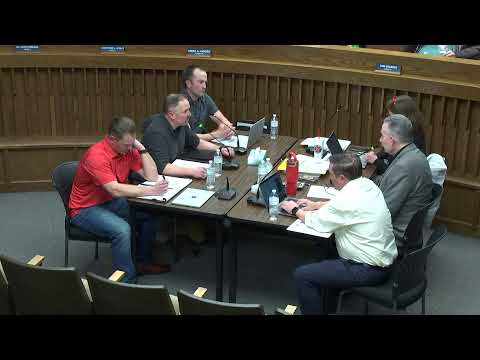
Mayor Collins and members of the governing body met in a special session March 17 for collective bargaining with Cheyenne Professional Firefighters, Local 279, but left without resolving wages after parties disagreed over which compensation data sets to use.
Mayor Collins said the city has increased staffing and invested in the fire department since he took office in January 2021, noting that staffing rose “from 89 firefighters” to 103 and that the city has built three new stations and ordered additional apparatus. He told negotiators he was "comfortable doing a 3% raise" as part of a broader assessment of pay and total compensation.
"Right now, we're willing to table wages and move forward onto other sections where progress can still be made," a participant said early in the meeting, offering to shift focus while wage data are reconciled. Mayor Collins, however, summarized his analysis of intercity comparisons and specialty pays and emphasized the role of retirement differences: he told the group that when cost-of-living adjustments are applied Cheyenne compares favorably with several peer cities and that the city’s pension plan provides more predictable retirement benefits than a 401-type plan.
Collins cited specific figures during his presentation — including an expected Safer grant balance of about $850,000 to be applied this year and an estimated recurring cost to support those positions of roughly $950,000 per year — and described other investments the city has made in firefighter safety, medical screening and station design.
Other participants pushed back that the parties were using different data sets and different definitions of pay. The meeting record shows disagreement over whether to include specialty pays (education stipends, EMT/paramedic differentials, acting pay) and how to calculate total compensation, and several members said they needed the opposing side’s full data set to review the methodology before settling wages.
Because participants could not agree on a single, auditable set of compensation data, the governing body took a short caucus. After the recess, members reiterated that wages remained the central outstanding issue and asked for time to review the other side’s numbers. Attendees discussed scheduling a follow-up session (possible times included Monday after the city council meeting, around 7–7:30 p.m.) and agreed to try to exchange data; one participant offered to show how he calculated comparisons after the meeting.
The special session concluded when Mr. Crave moved to adjourn and Dr. Aldrich seconded; the presiding official called the vote and the meeting was adjourned.
Next steps: parties agreed to exchange compensation data sets and to meet again to continue bargaining; no wage agreement was reached at the March 17 session.