Get Full Government Meeting Transcripts, Videos, & Alerts Forever!
Get email alerts on the Parks And Recreation Master Plan topic
No spam. Unsubscribe anytime.
Lennox kicks off 20‑year parks and recreation master plan; residents press for trails, dog park and field repairs
Summary
Consultants from Stockwell launched a master plan process with Lennox’s parks steering committee, describing a statistically valid survey and a schedule of stakeholder meetings; residents pressed for better maintenance, drainage fixes for softball fields and priorities such as trails, a dog park and pickleball courts.
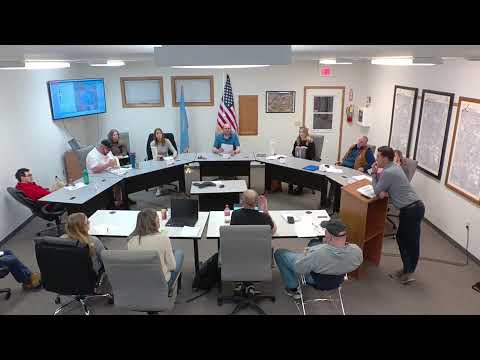
Consultants from Stockwell convened the Lennox Parks & Recreation steering committee to begin updating a 20‑year parks and recreation master plan, outlining inventory work, stakeholder outreach and a statistically valid community survey that will inform priorities.
“My name is David Lock, lead landscape architect with Stockwell,” Lock told the committee as he described tasks that include mapping existing facilities, conducting a level‑of‑service analysis and developing draft recommendations that the steering committee will help prioritize.
Lock said stakeholder meetings with businesses, city maintenance staff and organized user groups will precede a statistically valid survey of the school‑district area; he estimated the sample return would be “150 or 200” responses and said the process increases competitiveness for grants such as Land and Water Conservation Fund (LWCF).
Residents used the discussion to press for concrete improvements and to warn that prior planning efforts had not always resulted in completed projects. One attendee said past efforts “didn’t go any place” and asked bluntly, “Where’s the money going to come from?” Lock and other participants responded that a clear plan is the first step to prioritize projects and pursue grants and partnerships.
Maintenance and safety concerns surfaced repeatedly. A coach warned that the softball outfield is uneven and “it’s all crab grass lumps in the outfield,” saying players routinely roll ankles during practice; other attendees described poor drainage that limits irrigation and makes fields unusable after rain. Participants called for a cyclical maintenance plan and accessibility improvements such as concrete walkways from parking to concession areas.
On amenities, attendees repeatedly named trails, a dog park and pickleball courts as top additions. Several participants noted high local usage of pickleball—one speaker said about 29 teams participated recently—and advocated for dedicated courts. The group also discussed a splash pad as a possible amenity, with consultants cautioning that splash pads can cannibalize paid pool admission unless fenced or fee‑managed.
Participants explored options to expand field capacity. Attendees suggested reconfiguring existing ball‑field space to fit additional youth‑sized fields (200‑foot outfields) or partnering with the school district to turf the football field; a turf conversion was discussed as a potential $1.0–$1.3 million project that could attract sponsorship and grant funding.
Consultants said the timetable calls for spring site visits and inventory, survey administration in April–May, presentation of survey findings in June, drafting over the summer and final presentation and adoption by the city council in the fall. No formal motions or votes were taken at the meeting.
Next steps: steering committee members will review the draft survey before it is issued, attend stakeholder meetings, and reconvene to review preliminary findings that will shape the draft master plan.