Get Full Government Meeting Transcripts, Videos, & Alerts Forever!
Get email alerts on the Outsourcing And Accountability topic
No spam. Unsubscribe anytime.
Witnesses at House hearing clash over outsourcing, managed care and AI in federal workers' compensation
Summary
At a House Workforce subcommittee hearing, witnesses debated private contractors, managed care and AI. State and advocacy witnesses warned outsourcing can hinder access and accountability, while a vendor executive defended tech and outcome-focused networks.
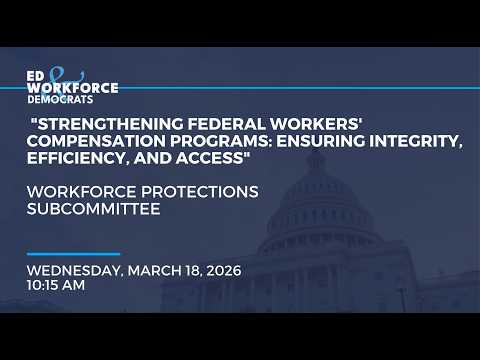
A House Workforce Protection Subcommittee hearing on federal workers' compensation turned into a debate over outsourcing, managed care models, and the use of artificial intelligence in claims processing.
Christopher Godfrey, director of research at the Workers' Injury Law & Advocacy Group, warned that "replacing accountable federal employees with private vendors does not reduce costs. It reduces accountability," arguing that administrative burdens and vendor incentives can make it harder for workers to find physicians and receive prompt care. Godfrey told the committee that contractors can be rewarded for short-term cost reductions that produce delays and denials, shifting costs to Medicare, Medicaid or private insurers.
Robert Johnson, president of Sedgwick Government Solutions, defended the role of private-sector managed-care practices, saying his organization serves millions of injured workers and uses technology to improve outcomes. When asked about prior fines and adverse state decisions involving Sedgwick, Johnson said he could not comment on individual cases without specifics but emphasized the firm's frontline efforts to return workers to work and cited investments in case coordination and preferred-provider networks.
Ohio Bureau of Workers' Compensation Administrator Stephanie Mloud described Ohio's experience contracting with managed care organizations (MCOs) and using AI to process routine claims faster. Mloud told the committee Ohio now handles roughly 78,000 new claims annually, manages nearly 200,000 active claims, and has expanded certified providers from roughly 6,900 to more than 91,000 since adopting managed care. She described AI applications including auto-adjudication for minor conditions, autoindexing of documents (initially 25—230% accuracy with a goal toward 80—90%), an internal policy chatbot, and data-chat tools to reduce staff hours.
Members pressed witnesses on safeguards. Johnson and Mloud said AI should augment human case managers and that state or agency governance and cyber controls are essential. Godfrey and Ranking Member Omar raised concerns that outsourcing core functions to vendors could create perverse incentives; Omar read into the record state fines and a workers' compensation appeals board excerpt criticizing vendor conduct in specific cases. The witness panel and members agreed on the need for robust contract monitoring, performance metrics, and cooperation with inspectors general when fraud or serious service failures occur.
Why this matters: the debate touches on access to care, program integrity and costs for federal workers. Members underscored the "grand bargain" of workers' compensation: prompt care and fair compensation in exchange for limited tort remedies, and they asked Congress to weigh modernization against maintaining protections.
Next steps: the hearing record is open for 14 days for additional statements and documents; members signaled interest in further oversight of vendor performance, MCO certification standards, and statutory clarifications around schedule awards and benefit administration.