Get Full Government Meeting Transcripts, Videos, & Alerts Forever!
Get email alerts on the Science Of Reading topic
No spam. Unsubscribe anytime.
Committee backs Science of Reading Act to steer literacy funding toward phonics-based instruction
Summary
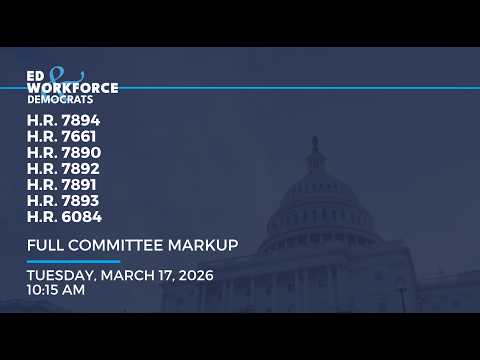
The House Education and Workforce Committee unanimously approved an amendment in the nature of a substitute to HR7890 to emphasize phonics-centered literacy programs and to prioritize federal literacy grants to states aligning with the 'science of reading.'
The House Education and Workforce Committee unanimously approved HR7890, the Science of Reading Act of 2026, moving the bill forward after an amendment in the nature of a substitute was agreed. Sponsors and supporters from both parties said the measure aligns competitive federal literacy grants under the Elementary and Secondary Education Act with evidence-based practices — emphasizing phonics, phonemic awareness, fluency, vocabulary and comprehension.
Representative McKenzie and other sponsors argued that decades of research and state-level reversals toward phonics justify congressional action to prioritize federal support for programs grounded in reading science. Members who have classroom experience and literacy backgrounds described district-level successes after switching to phonics-based curricula and emphasized the need for adequate teacher training and professional development as part of implementation.
The amendment in the nature of a substitute, described by committee managers as a technical and clarifying change, was agreed to on a recorded vote; the committee then voted to report the bill to the House by roll call. Supporters stressed that the bill preserves local control of curriculum while directing federal grant preferences to states that adopt evidence-backed literacy plans.