Get Full Government Meeting Transcripts, Videos, & Alerts Forever!
Get email alerts on the Fund Accounting topic
No spam. Unsubscribe anytime.
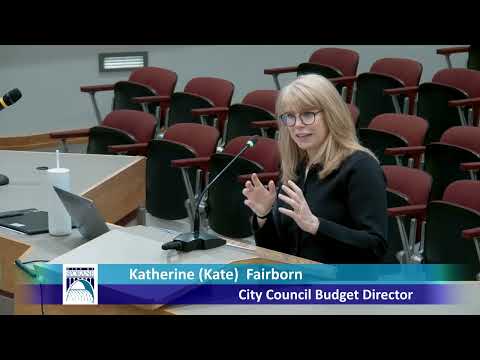
Director Kate Fairborn explains why Spokane runs 130+ funds and how municipal accounting works
Summary
Director Kate Fairborn told the Spokane City Council that multiple fund types, state accounting codes and GASB standards exist to ensure legal accountability and transparency; she said those systems create the more than 130 funds in the city budget and help auditors trace restricted dollars.
Director Kate Fairborn presented a primer on municipal accounting at a Spokane City Council study session, explaining why the city maintains more than 130 separate funds and how those fund types enforce legal and managerial accountability.
"Municipal accounting seeks to provide greater accountability rather than focusing on profitability," Fairborn said, describing the system as a tool to ensure money is used "as we promised." She said Spokane uses state coding conventions and generally accepted government reporting standards so auditors and the public can follow where restricted and grant funds are spent.
Fairborn walked council members through the major fund types: the general fund that supports day‑to‑day services (police, courts, parks and elected‑office budgets); special revenue funds for monies legally restricted by statute, contract or grant; enterprise funds for self‑sustaining utility and customer‑facing services; capital project funds for long‑term investments; debt service funds for bond payments; and fiduciary accounts used only to hold other parties' funds (pension and court escrows).
She said the city uses two organizing tools: the state BARS accounting coding conventions (which produce the multi‑digit account strings staff see on agenda materials) and national Governmental Accounting Standards Board rules that prioritize transparency. Those systems together create legal "firewalls" around restricted funds and specify what sorts of interfund exchanges and overhead allocations are allowable.
Council members raised questions about internal service (interfund) charges such as IT and finance allocations, saying those charges sometimes appear inconsistent across departments. Fairborn acknowledged the allocation process can be complex and said staff—including CFO Matt Boston, Jessica Stratton and budget lead Jacob Miller—will provide a more detailed briefing and cost‑allocation explanation for council.
Fairborn and council members agreed staff will follow up with deeper dives into enterprise funds and proposed examples that show how internal charges are computed. The presentation concluded with an invitation to council to request specific fund‑level analyses during upcoming budget work sessions.